I enjoy having the ability to make a tangible difference to places and communities. We have a unique opportunity to influence how neighbourhoods evolve, helping to balance growth, environmental considerations and community needs. The work is varied, challenging and rewarding, with no two days ever being quite the same.
Career journey and role
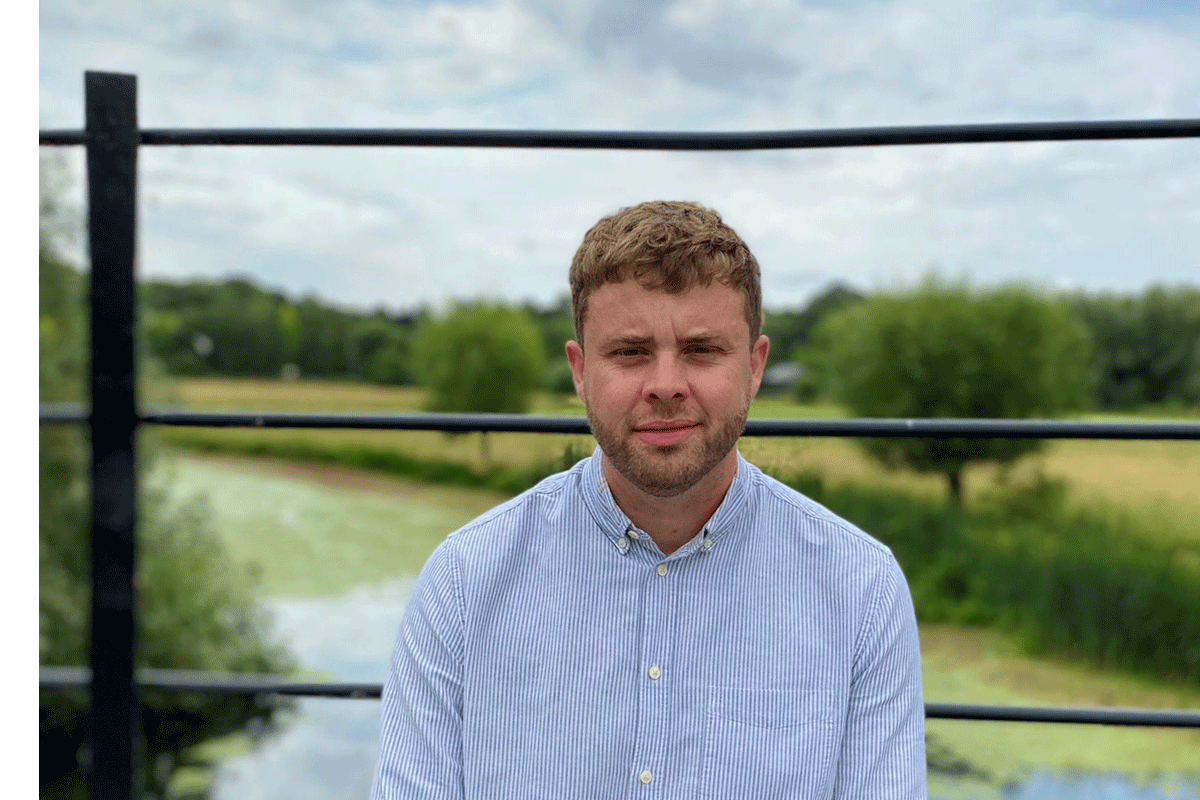
I am a Chartered Landscape Architect and Urban Designer with 20 years’ experience working across planning, design and placemaking. I currently lead East Suffolk Council’s Design and Specialist Services team, bringing together expertise in urban design, heritage, landscape, arboriculture, ecology and rights of way to support the delivery of high-quality places across the district.
My career began in landscape architecture, working on a wide range of projects in both the private and public sectors. Over time, i became increasingly interested in the wider planning system and the role that design plays in shaping successful communities. This led me into urban design and placemaking, where I have worked on everything from individual development proposals to strategic master planning initiatives and design guidance projects.
Alongside my role at East Suffolk Council, i serve as the East of England Place Advocate, supporting local authorities across the region to champion good design and place quality. I am also a member of several awards jury's and work closely with professional institutes, government bodies and local authorities to promote better placemaking outcomes.
Value of working in local government
Unlike many roles, you can see the direct impact of your work on the ground, whether that is helping shape a new neighbourhood, protecting valued landscapes and heritage assets, improving biodiversity, or creating better public spaces.
The breadth of experience available is another significant benefit. Throughout my career I have worked alongside multiple stakeholders including planners, councillors, and local communities. This exposure provides a depth and variety of experience that is difficult to replicate elsewhere and offers excellent opportunities for professional development.
While I have worked in both the public and private sectors, I have always been drawn back to roles where I can influence decision-making and help shape the long-term future of places.
Success is not solely measured by commercial outcomes. Instead, the focus is on delivering the best possible outcomes for communities, landscapes and the environment. There is also a unique satisfaction in seeing projects evolve from initial ideas through to delivery and knowing that your contribution has helped improve a place for the people who live, work and visit there.
One of the biggest misconceptions is that local government planning is narrow or purely regulatory. In reality, local authorities are at the heart of shaping places. Planning in local government provides opportunities to work on strategic policy, regeneration, design, climate change, biodiversity, infrastructure, housing delivery and community engagement.
Another misconception is that career progression and professional development are limited compared with the private sector. My experience has been the opposite. Local government has provided opportunities to work across a huge range of disciplines, take on leadership responsibilities, contribute to regional and national initiatives, and develop a broad understanding of how places are planned, designed and delivered.
Chartership
I became a Chartered Member of the Landscape Institute and later achieved Recognised Practitioner status with the Urban Design Group.
Chartership demonstrates professional competence, commitment and credibility. It provides reassurance to employers, colleagues and clients that you have achieved a recognised professional standard and are committed to maintaining and developing your skills.
For me, chartership also provided confidence. The process encouraged me to reflect on my experience, identify areas for development and recognise the knowledge and skills I had gained throughout my career. It marked an important milestone in my professional development and opened up opportunities for progression and leadership.
Like many people, I found the prospect of chartership daunting at first. It can feel like a significant challenge when viewed as a single end goal. What helped me was breaking the process down into manageable stages and recognising that chartership is ultimately about demonstrating the experience and knowledge you develop through your day-to-day work.
Start recording examples of your work early, seek support from mentors and colleagues, and not wait until you feel “ready” before beginning the process.
Most professionals know far more than they give themselves credit for. Chartership is not about being perfect; it is about demonstrating professional growth, reflection and competence.
The sooner you engage with the process, the more straightforward it becomes.
Advice
My advice to those starting out is to remain curious, seek out opportunities beyond your immediate role, and build strong relationships across disciplines. The best places are created through collaboration, and some of the most valuable learning comes from working alongside colleagues with different skills and perspectives.