Legacy back-office systems are holding many planning departments back—slowing processes, frustrating staff, and limiting the ability to deliver efficient, modern services for our communities. Replacing them is no small task; for most councils, it feels like a mountain to climb. But it can be done. This case study shows how Milton Keynes City Council took on the challenge, navigated the risks, and is transforming its planning service with a new cloud-based platform. It is proof that while digital transformation is hard, it is not impossible. March 2026.
1. About this case study

This case study focuses on Milton Keynes City Council’s (MKCC) built environment software solution (BESS) project; a successful upgrade of its planning department’s back-office systems, and a major digital transformation project that many councils find daunting. The council replaced a fragmented legacy setup (Idox Uniform, NEC Document Management, Agile Swiftsearch, and Astun) with a single, cloud-based platform: Arcus Global Built Environment.
This new system covers Development Management, Enforcement, Land Charges, Building Control, and Housing Monitoring, offering features like digital submissions, live dashboards, mobile access, and integrated document management.
'Replacing back-office systems for planning departments is seen by most as a very significant challenge. We are pleased to share our experience of what can be achieved when there is commitment to delivering a new system which supports an efficient and modern planning service. I would encourage any authority to start their own digital transformation by learning from Milton Keynes City Council's journey, and being confident of navigating the challenges ahead with the benefit of the advice below, curated from our lived experience.'
Councillor Shanika Mahendran (Cabinet Member for Planning & Placemaking, Milton Keynes City Council).
2. Drivers for change
Drivers for change - key advice & learning:
-
Make good use of failure/ failure demand to initiate change. It can be a powerful component in your Business Case.
-
Gather data now on current system downtime, customer complaint processing, loss of productive working hours, or whatever your point of pain is.
-
Make in-house Systems Admin part of your business case (recruitment/ upskilling) - you especially need them once you have a new system in.
A build up of issues
The service’s Idox Uniform system had been in place for over 25 years and subject to multiple upgrades, reconfigurations and patches. This led to the system becoming unreliable and resulted in fragmented knowledge about how the system was configured and how to get the best out of it. Additionally, as a server-based system hosted on internal servers, it didn’t fit with the council’s wider programme for moving to cloud-based solutions.
The system relied entirely on the supplier for any serious technical work. Routine updates, patches and fixes often caused significant downtime leading to lost productivity. When the Public Access module failed, customer complaints quickly followed.
Beyond this, the system’s limitations created further frustration: poor mobile compatibility, automated timeouts, and non-shareable links made engaging with the system frustrating for staff and difficult for residents and developers.
"Trigger" events
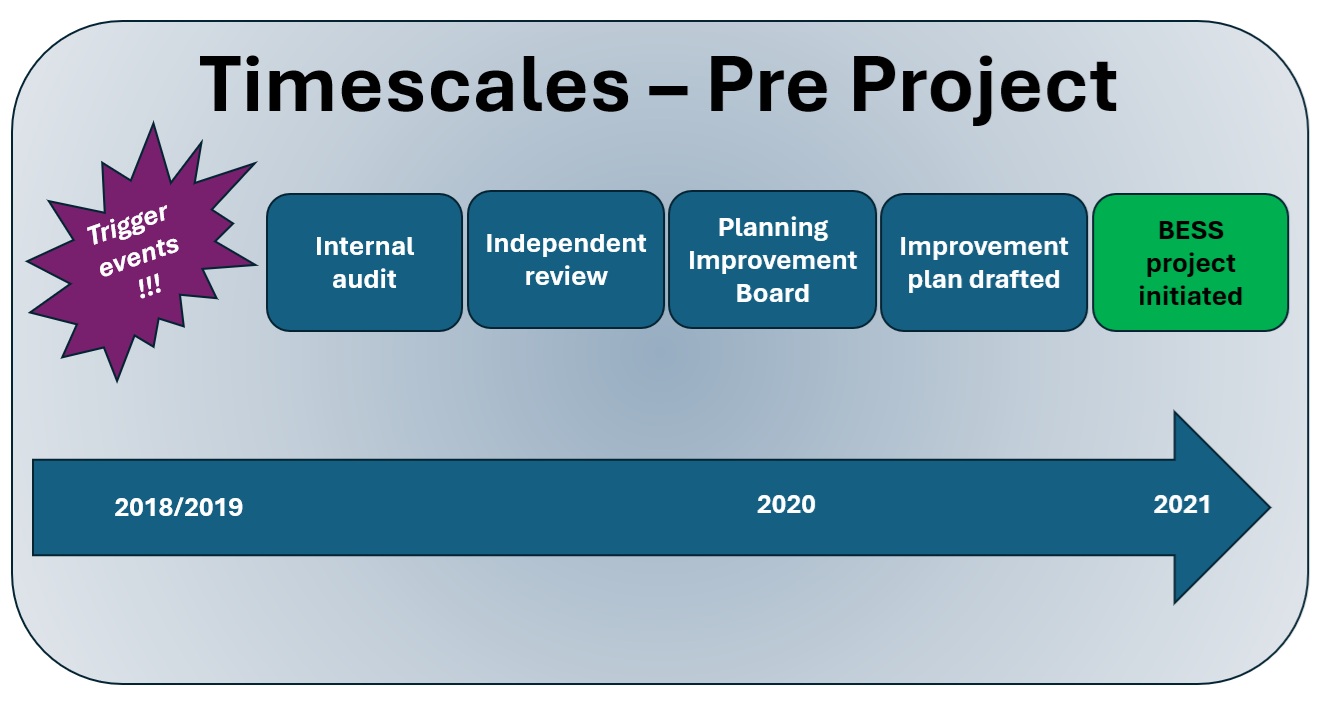
The lead-in time for the BESS project began as far back as 2018. The cumulative impact of the system issues in the 'drivers for change' couldn’t be ignored as they had such a detrimental effect on planning work and the ability to provide a good service.
Reflecting, the Milton Keynes team refer to how they “seized opportunity from adversity” - the system problems and issues, while frustrating, provided the impetus that led to the culture shift required to bite the bullet and instigate the major change required. The BESS project itself was initiated in 2021.
3. The planning service response
Planning service response - key advice & learning:
-
Map current processes ideally before market testing and certainly before any procurement.
-
Generate your 'must haves' and 'would like' requirements of a new system - things your current system processes don't allow.
-
Be bold and ambitious with this - what would be your ideal? Don’t be constrained by years of working in the same way.
-
Beyond your service, start to garner support from as many parts of the organisation as possible (your Director, IT, Customer Services, Procurement).
The planning service set up a Planning Improvement Board, prepared an Improvement Plan, and commissioned an independent review via a Peer Challenge carried out by the Planning Advisory Service (PAS) in March 2022.
The review acknowledged the importance of the Improvement Plan which included the major project to replace the Development Management IT system. The IT system project was part of a programme of actions – prioritising improvements to processes in readiness for the IT system – too often this happens the other way around.
4. The political response
The political response - key advice & learning:
- Secure political support - if you can - for change.
- Use your data to demonstrate the benefits you are targeting (like automation, efficiencies, customer experience).
- Keep members briefed - if you do change systems there will be service disruption that you'll need their support for.
Things came to a head during a Full Council meeting in September 2023. The portfolio holder was asked questions about the reliability of the council’s planning system portal. The Leader made it clear that officers had already been instructed to mitigate these problems. Notably the Leader said that
“system improvements were not optional extras but essential to maintaining public confidence in the planning process”.
This political direction was elevated into a formal corporate objective, with the Council Plan later setting a clear milestone to “launch a new online planning portal by October 2024”. This created an extremely challenging deadline for the project, but having this level of political leadership meant the service could respond transparently to public concerns, and provided a mandate for officers to deliver change. For councils embarking on similar digital upgrades, securing visible and sustained political backing is a key success factor.
5. Project management
Project management - key advice & learning:
- Bring in dedicated project resource - don't add this to someone's day job.
- Second someone or recruit the resource. Use budget from a vacant post or capitalise staff costs.
- Have a varied and inclusive project team; you need change champions within the service, but you also need a lot of support from other colleagues.
- Start with any lessons learned from similar projects (not just this one but any in your organisation).
"Trigger" events
The lead-in time for the BESS project began as far back as 2018. The cumulative impact of the system issues in the 'drivers for change' couldn’t be ignored as they had such a detrimental effect on planning work and the ability to provide a good service.
Reflecting, the Milton Keynes team refer to how they “seized opportunity from adversity” - the system problems and issues, while frustrating, provided the impetus that led to the culture shift required to bite the bullet and instigate the major change required. The BESS project itself was initiated in 2021.
Project management methodology
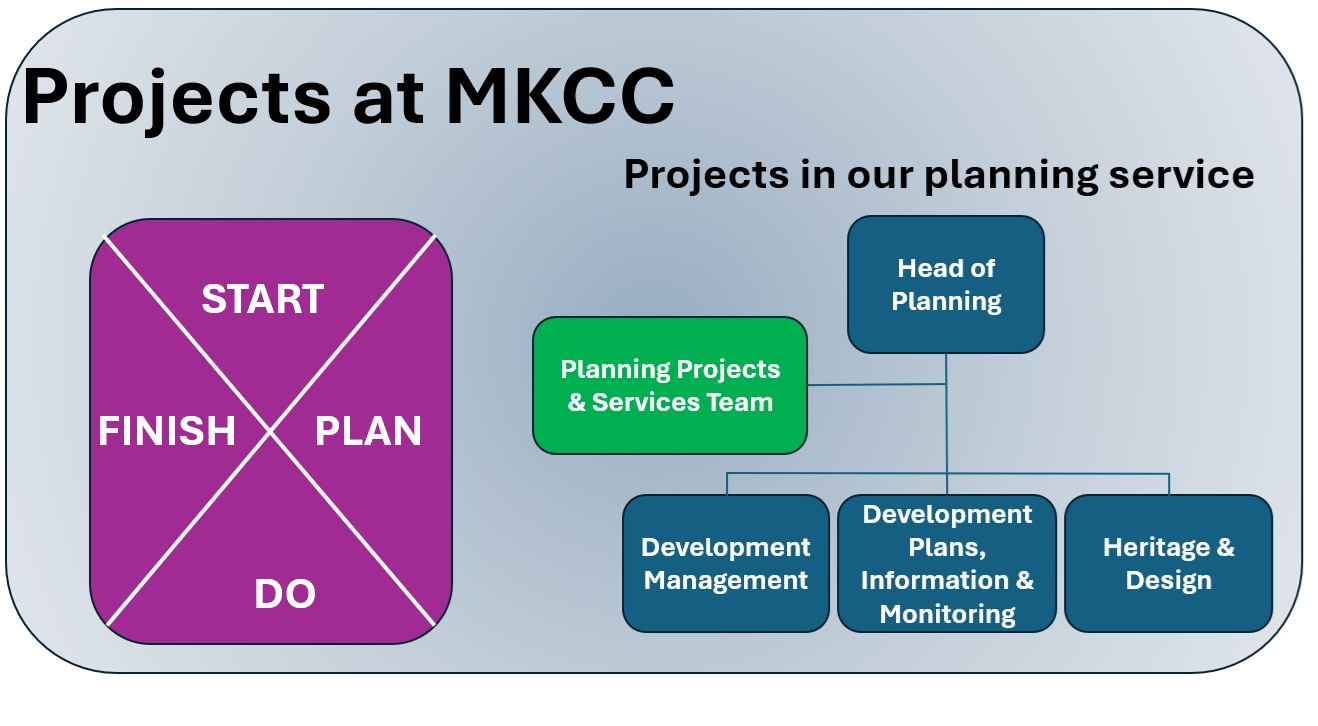
MKCC has adopted a streamlined version of the Prince2 project management methodology, built around four simple stages: Start, Plan, Do, Finish. Such an approach provides structure, accountability, and a clear roadmap. Having this set out is crucial because there are bold decisions to be made to keep the project on track, often under pressure.
Dedicated project resources
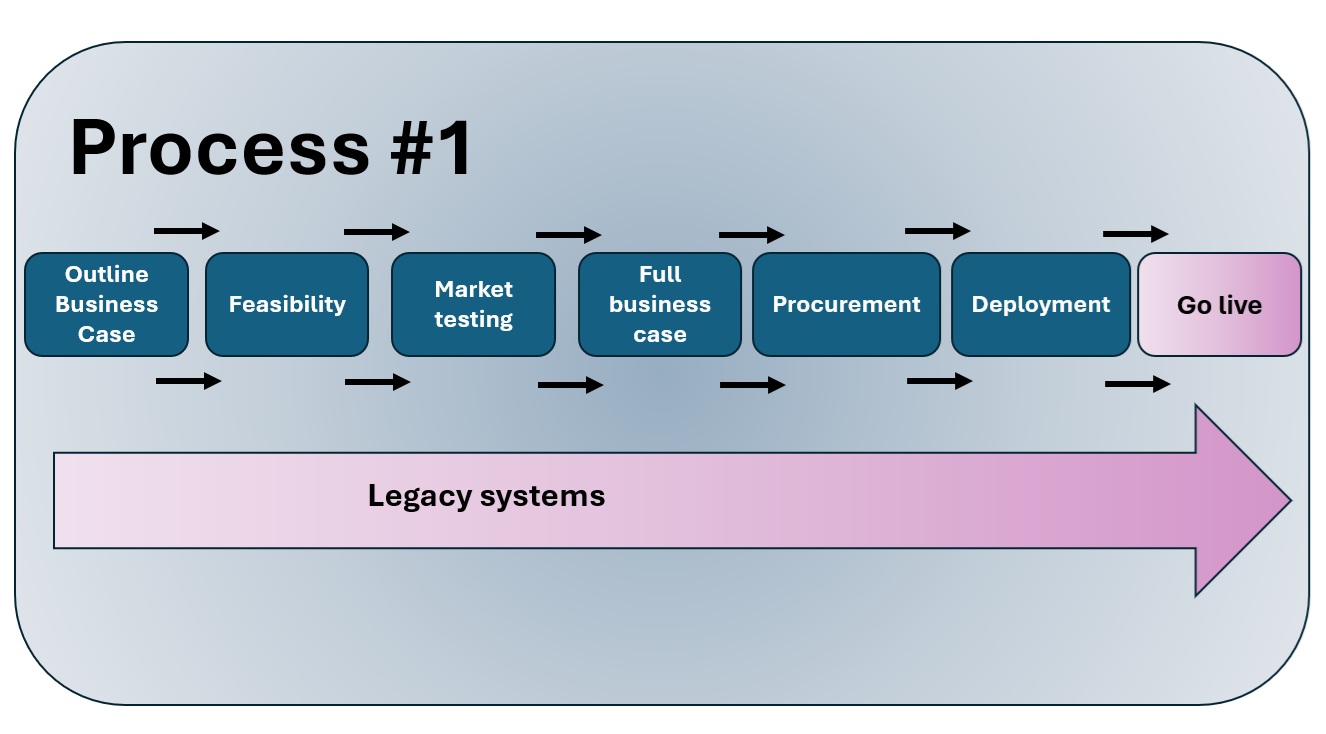
A project of this complexity is difficult to deliver in and around the ‘day job’. Planners can’t be expected to juggle caseloads alongside project duties. Instead, MKCC utilised its dedicated Projects Team, which provides business support and manages projects and programmes across the planning service.
Mapping out the BESS Project
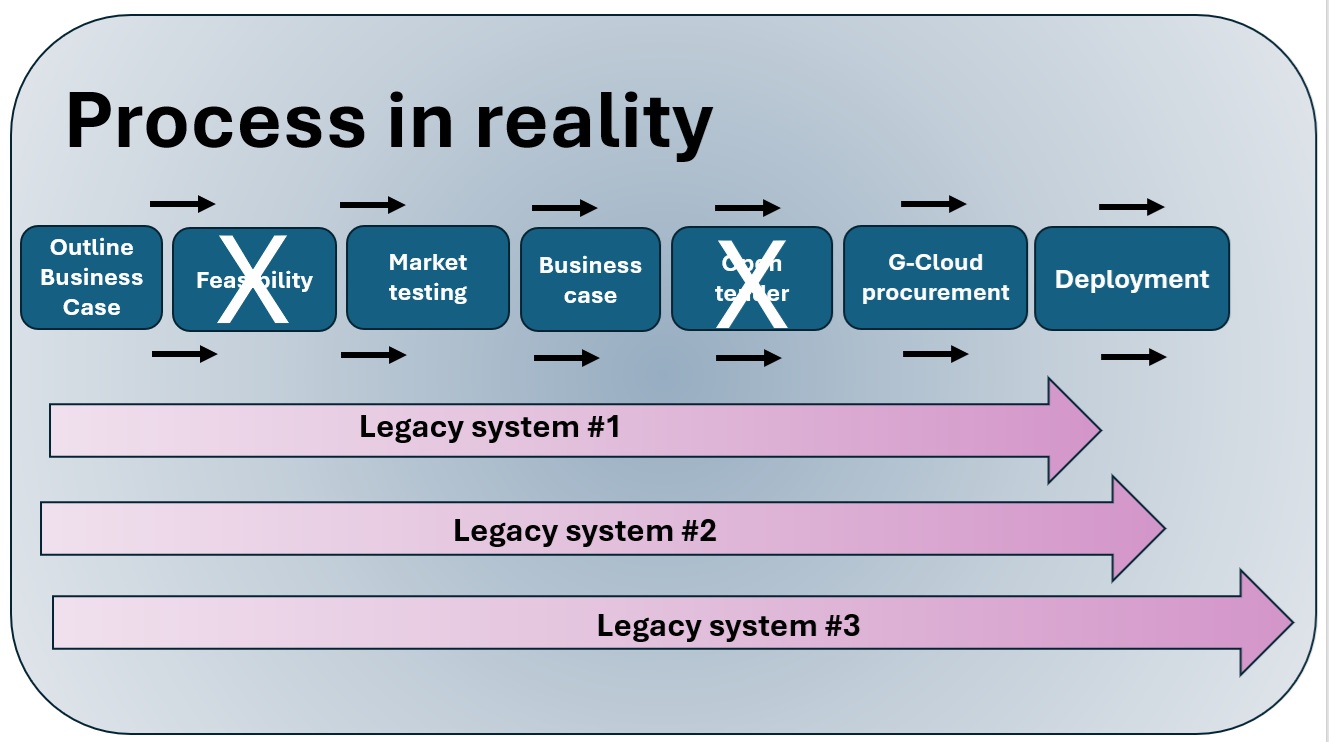
The project began with a clear roadmap:
6. Procurement - lessons learned
Procurement - key advice & learning:
- Market test with your 'must haves' firmly in mind.
- Gauge the potential client/ supplier relationship - how agile are they? What's the fit with your organisational culture?
- Bring in as many of your internal stakeholders as possible to your procurement activities and meetings.
- Be prepared to or offer to do a lot of the legwork on procurement to get the solution you want and facilitate effective change management.
- Spend time on these stages to get them right and reflect that in your programme (maybe double your initial time estimate!)
Issue #1 - available budget
Things didn’t go entirely to plan. At the outline business case stage, the budget couldn't stretch to an externally sourced feasibility study. The choice was to complete feasibility work internally or move straight to market testing—a critical moment that increased risk. The decision was made to proceed to market testing to quickly establish some preferred suppliers.
Issue #2– procurement framework
Originally, the plan was to use the Crown Commercial G-Cloud framework for procurement. However, the timing wasn’t ideal; G-Cloud was about to carry out its regular framework ‘refresh’, creating a risk that preferred suppliers might not appear on the new list. The service also wanted a system tailored to its needs—not one dictated by market limitations based on just suppliers in the G-Cloud framework. To retain control, MKCC opted for an open tender process, writing its own specification and publishing it to the market.
Issue #3 - a procurement ‘twist’
The open tender progressed well - until the point of signing contracts. An unforeseen issue with signing terms and conditions meant the process had to be abandoned - a frustrating setback at the final hurdle. With time running short, MKCC reverted to the G-Cloud route. Fortunately, the earlier work on specifications meant this process was quick, and the council was able to proceed with its preferred bidder.
Procurement lessons
- The playing field is small - Although there are more suppliers in the market today, the number is still limited. The built-environment technology space continues to suffer from a lack of strong market competition, which can restrict choice, reduce flexibility, and make it harder for councils to find solutions that fully meet their needs.
- Public sector procurement is not straight-forward - it demands a high level of rigour and process – this is public money and with that comes strict adherence to legislation and internal council rules. The involvement of key stakeholders, legal, councillors etc. in the sign-off process can make the process slow and resource-intensive, but these safeguards are essential for protecting the public interest and delivering long-term.
- Procurement frameworks – pros and cons: Reverting to the G-Cloud framework was the right decision at the time. However, while the framework enabled a quicker route to market, an open tender would have allowed them to agree a longer-term contract. They are currently two years into a 3+1-year framework contract, whereas an open tender could have secured a seven-year term.
- Your contract will be tested – Even with rigorous and lengthy work on the specification, MKCC still found themselves varying the contract because this was a new area for the planning team. It is difficult to know exactly what you need at the outset, and the team has continued to learn throughout the process. As a result, they have identified requirements they were not aware of when the contract was originally signed.
7. Deploying the new system
Deploying the system - key advice & learning:
- Have a really robust Comms Plan for every stage of the project, applying change management best practice (the bigger the change the more and more frequent the communication).
- Get support for this with your Comms team and Customer specialists.
- Get your 'change champions' lined up - use their interest and enthusiasm to bring others along.
- Manage expectations through your training plan: mirror the training environment as closely you can to your 'go live' system environment.
Deciding on the system?
MKCC selected Arcus Global Built Environment - a cloud-based solution designed to handle Development Management, Enforcement, Land Charges, Building Control, and Housing Monitoring in one integrated environment.
Arcus offered exactly what MKCC needed: digital submissions, live dashboards, mobile access, and integrated document management. These features aligned perfectly with the council’s vision for a planning service that could support remote working, improve transparency, and deliver efficiencies. More than that, the choice of Arcus created a foundation for continuous improvement, opening the door to innovations such as AI integration and advanced analytics
This wasn’t just a technical upgrade; it was a strategic move to future-proof the service.
In short, the council didn’t just install a new system; it navigated a complex procurement process, engaged stakeholders at every level, and delivered a full-scale transformation under intense time pressure.
The result? A modern, cloud-based platform that has redefined how planning services operate—and set the stage for future innovation.
Engagement was broad and inclusive: IT, Procurement, Legal, Finance, GIS, and Customer Services all had a seat at the table. A dedicated user group - chaired by a councillor with IT expertise and including parish representatives, agents, and residents - ensured that the voices of end-users were heard throughout.
The original plan for a phased rollout gave way to a “big bang” switchover, driven by the Council Plan’s deadline. This compressed timeline demanded agility and resilience from the project team. Training was delivered by an external supplier, focusing on the in-house Systems Admin team, while other officers supported data migration and user acceptance testing. Wider training was limited, and customers were expected to self-learn - a challenge that, remarkably, was largely met due to the intuitive nature of the product.
Legacy systems were retired in stages: Land Charges switched off immediately while Development Management remained in the background for six months before being decommissioned (due to server retirement). The corporate document management system is still in use, requiring a major data migration task before full closure.
Bringing the planning team with you - early in the process, the BESS User Group showed some reluctance to change, mainly due to discomfort with new ways of working. The council took a measured approach, avoiding over-emphasising this feedback. The Customer Relationship Manager, who is also within the Planning Projects and Services Team, served as the first point of contact for any system issues, providing support and guidance that helped users adapt and allowed the initial resistance to ease over time.
To keep momentum and interest high (!), MKCC introduced a new GIS system six months after go-live, reinforcing its commitment to modernisation.
8. Impact / Outcomes
Impact / outcomes - key advice & learning:
- Have a proactive 'post deployment' plan; roadmap your likely return to Business As Usual and keep communicating on this.
- Keep investing in your Systems Admin - it gives you freedom in the longer term to maintain and improve systems yourselves.
Productivity increases across the service - the business case set a target of reducing manual intervention in data capture and processing by at least 50%. This goal has been exceeded across most areas, particularly where improved links between the Planning Portal and the Council’s website have reduced re-keying and administrative effort:
- 85% improvement in Land Charges
- 51% in Development Management
- 73% in Building Control
- 78% in Monitoring
Substantial improvement in system reliability
A key target was to reduce system downtime by 95%. This has been comfortably exceeded. Since deployment, total downtime stands at just 2.75 hours, all of which formed part of a planned intervention to address data fixes from go-live. No unplanned outages have occurred, and no customer complaints have been received relating to system availability.
Better productivity through mobility and real-time access
Officers can now access and update casework instantly, whether in the office or on site. Productivity has increased by around 100% across Development Management, Building Control and Monitoring, and by 90% within Enforcement. This shift has fundamentally changed how the service operates, removing previous barriers created by static, office-based systems.
Wider impacts - The benefits of the new system extend beyond efficiency data:
- The service has received no customer complaints about system availability since launch.
- All issues raised internally have been known to the team and already included on the product roadmap.
- Improved reliability and visibility have helped ease external and political pressure on the planning service, which had previously faced criticism linked to system failures.
A service transformed - Taken together, these outcomes represent a step-change in how the planning service operates. Automation and streamlined processes have delivered dramatic reductions in manual handling, with Land Charges alone achieving an 82% improvement. System reliability has improved to the point where downtime is no longer a source of operational risk.
A more confident and capable workforce. The cultural impact has been equally important. Modern tools, intuitive workflows and real-time access have increased staff confidence and enabled teams to focus more on professional judgement rather than administrative burden. As a result, the service now feels more resilient, more responsive and better equipped to meet both operational pressures and customer expectations.
9. Pitfalls, lessons learned
The project has produced some extremely positive outcomes and impacts but it is fair to say this was not plain sailing for MKCC. These problems and pitfalls have enabled MKCC to reflect on what they would do differently and produce some very useful lessons and recommendations for LPAs embarking on similar projects.
- Not recognising the complexity of the project from the outset. The implementation quickly proved to be more akin to a programme of interrelated workstreams than a single project, with the full complexity only becoming clear once work was underway. The planning service led delivery, reflecting local arrangements, and highlighting the trade-offs between service-led and IT-led approaches: the former can strengthen professional ownership, while the latter may bring greater technical oversight. A key learning for other planning services is the importance of early joint workshops with IT to map workstreams, system dependencies and infrastructure requirements, helping senior leaders better understand the scale of change and put proportionate governance and resources in place from the outset.
- Compressed timescales / procurement. Although timescale was an obvious issue for this project, it wasn’t due to an unrealistic target being set from the outset, but rather a set of unforeseen circumstances surrounding the procurement process that set the project back. The immediate lesson derived is therefore to ensure the knowledge and skills are present within the wider project team in areas such as procurement and contract management. Public sector procurement is not an easy process and made more difficult for this project due to the lack of market competition in the built environment space. Avoid unrealistic deadlines, manage expectations and plan for a phased migration where possible.
- Adequate staff resourcing. As well as the procurement expertise mentioned above, a full-time IT project manager would also be recommended for projects of this scale. Post go-live also presented unforeseen staff resourcing issues as the project team struggled with the volume of work required at this stage. Too few staff were trained on system configuration and inner workings. Additional officers, or indeed a seconded service representative would be recommended for this stage. so map staff resources accurately and plan for peak workloads.
- Deployment/business as usual. The planned 2-week outage was always going to lead to a backlog in caseload, particularly in Development Management. Some cases were not sufficiently advanced to deal with prior to this period, and planning applications during were being stored on the Planning Portal. In this instance, the team had to adopt a managed approach over 6-months post Go-Live to bring the backlog down and return to pre-switch over caseload volumes and turnaround times.
- Ensure robust support and training post go-live. Sufficient staff resource is essential, especially post go-live, Adequate data storage must be planned for from the outset and simplified document management and filing structures aid project delivery
- The early and broad engagement with IT and user groups is critical. Clear and consistent communication throughout the project is vital, and indeed MKCC would recommend the use of comms specialists throughout the project. During the 6-months after Go-Live the Planning Service Customer Relationship Manager helped to deal with customer communications for Development Management and relieve the pressure on case officers so they did not need to deal with customers chasing for progress. Clear and consistent communication throughout the project is vital
Collectively, these challenges highlight a familiar truth: digital transformation is difficult, especially under intense time pressure. However, they also underline the importance of strong leadership, clear communication, and persistence - factors that ultimately helped the project succeed despite its early hurdles.
10. Looking ahead
The journey isn’t over. MKCC is still in configuration stage and testing AI tools for development management and digital assistants for planning web pages, ensuring MKCC remains at the forefront of digital planning innovation.
As an example, an AI pilot testing the efficiency of the tool during the planning application validation process, resulted in an 80% reduction in time taken to administer this process.