A 5 step process to deliver the Nature Recovery Toolkit workshop
Before bringing people together, be clear about the basics.
You will need:
- A named senior sponsor
- A named coordinator
- An agreed place where actions will land (for example a service plan, board or programme)
Learning from the pilots showed that momentum is difficult to sustain without this in place.
Common pitfall:
Strong enthusiasm, but no clear ownership.
Quick fix:
Agree ownership early, even if governance feels informal at first.
Nature needs our support and 'nature based solutions' can help deliver councils corporate and service priorities too. Take a look at the resources section to see how nature can help deliver health and well-being, economic regeneration and climate adaption and resilience.
Pilot councils found that there was a lot of existing activity that was not being captured and recognised.
- Small, role specific actions can be just as effective as large abstract asks especially when ‘stacked’ together to create a whole picture of effort.
- People engage more when biodiversity is connected to health, wellbeing, and identity at work.
Surface barriers honestly and separate them into two groups:
Within your control
- Skills and confidence
- Data and evidence
- Internal processes
Within your influence
- Partners
- Funding structures
- National policy
Focus first on barriers you can influence directly. This helped pilot councils maintain confidence and pace.
Each priority should result in a small number of clear actions.
Keep actions simple and service‑led.
For each action, be clear about:
- What will change?
- Who owns it?
- Where it will sit (for example service plan or strategy)
- When progress will be reviewed
Learning from the pilots showed that “good enough” actions that are owned and reviewed are more valuable than perfect actions that never land.
The toolkit works best when followed by light, visible follow‑up.
In the first 90 days:
- Check progress on agreed actions
- Share early wins and learning
- Adjust priorities if needed
Many councils revisit parts of the toolkit when:
- New duties or strategies emerge
- The organisation changes
- Momentum starts to stall
Resources
Below are some resources to help deliver your workshop including a drop down topic menu of useful information you may wish to include, and some useful templates for presentations and documents.
Local authorities face unprecedented challenges to delivery, including; spending cuts, skills shortages, economic uncertainty, climate change, welfare reform, youth unemployment, housing and infrastructure needs, and an ageing population, to name but a few. Coupled with this there is local government reorganisation and devolution all which require a whole new way of thinking.
- Recovering or enhancing biodiversity does not just allow nature to thrive, it also sustains economies, creates jobs, increases climate resilience and enhances the health and wellbeing of residents.
We are also facing a twin crises!
We are facing twin crises - an ecological crisis that is exacerbated by, and exacerbates, the climate crisis.
Along with the transformative changes needed to tackle climate change and deliver Net Zero, transformative change is also needed to deliver Nature Recovery and this requires a mind-set shift for national government and local authorities.
Power in Place: nature, The handbook of Local authority nature recovery Powers
What is the link between climate and nature: Addressing both together is a win win
We are in the middle of a climate and nature emergency, and the two are inextricably linked. Climate change is driving nature’s decline, and the loss of wildlife and wild places leaves us ill-equipped to reduce carbon emissions and adapt to change. One cannot be solved without the other.
When healthy, our natural habitats can reduce the risk of flooding, help prevent coastal erosion, improve people’s health and wellbeing, as well as maintain healthy soils, clean water and the pollinators needed for our crops, and therefore sustain us.
Environmental impacts affecting assets and services
- changing temperatures
- flooding
- air and water quality
- biodiversity decline
- impact of recreation e.g. disturbing wildlife
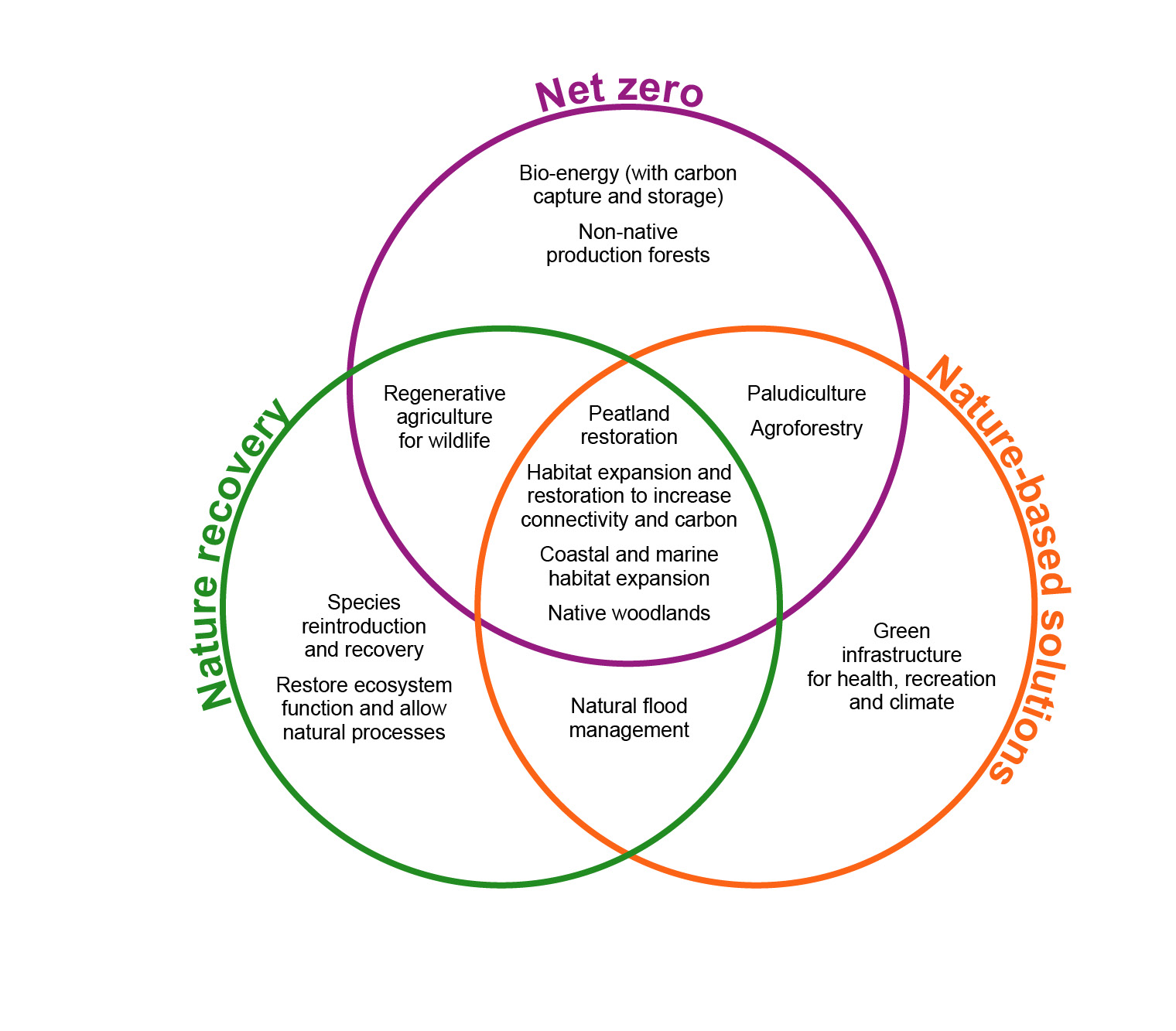
Linking policy agendas together
Although the nature and climate crises are inextricably linked, the decline of nature can still be somewhat divorced from addressing climate change. There is not a sufficient amount of and variety of policies to clearly tie into wider priorities: environment, care, health, economy and housing.
So how you pitch it is key:
- Supporting housing development: Embedding green infrastructure in new and existing housing will ensure high levels of quality of life and quality of place.
- Enabling sustainable transport: Integration of green and grey transport infrastructure will be an essential element to facilitate truly sustainable growth
- Better health and wellbeing: People enjoy access to natural green spaces for recreation, leisure, relaxation, inspiration and improved health and wellbeing.
- Addressing the climate and biodiversity emergencies: Green Infrastructure will be part of our contribution to global efforts to reduce carbon emissions towards a zero-carbon future. This will include tree planting, habitat restoration and people walking and cycling instead of using fossil-fuel-based modes of transport.
- Reducing flood risk: Green infrastructure will help to reduce the risk of both fluvial (related to a river) and surface water flooding.
- Improving air quality: Green infrastructure will provide a cost-effective, adaptable and small-scale solutions to help address pollution. This will improve people’s health and overall quality of life.
- Thriving biodiversity: Networks of green infrastructure will provide great spaces for wildlife. They will contribute to a healthy natural environment.
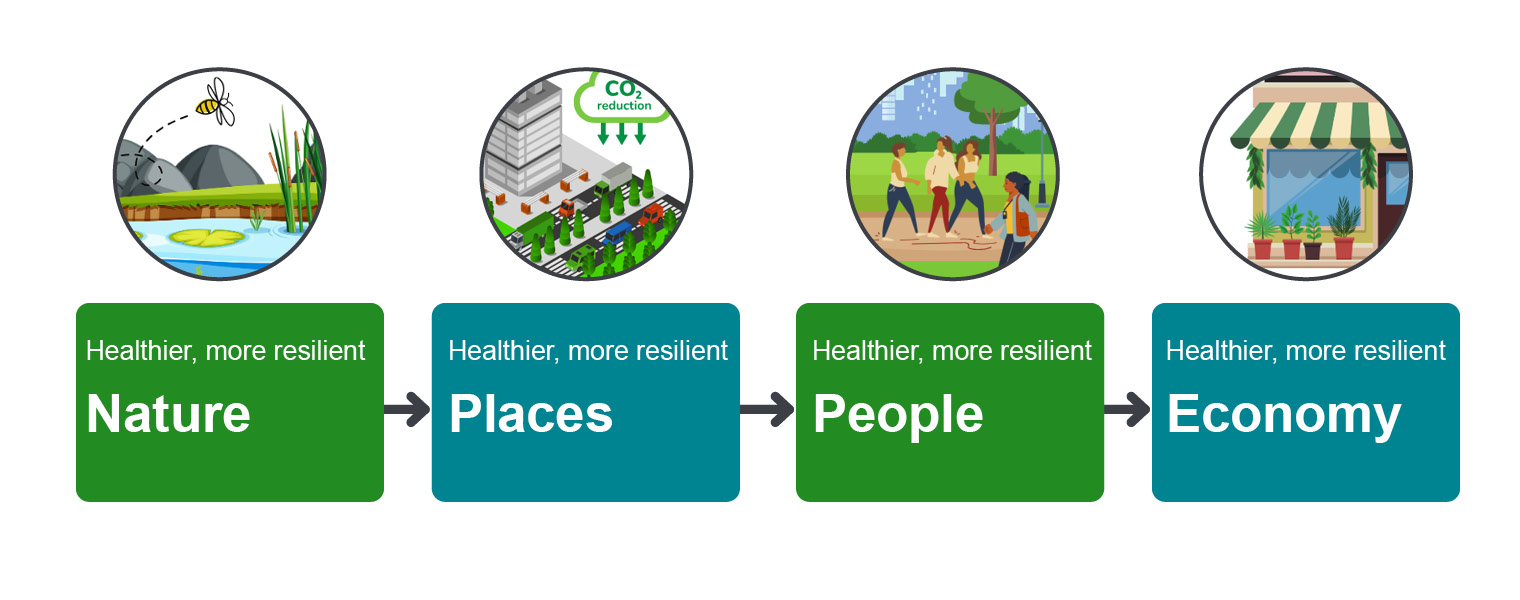
Healthier and more resilient nature close to where people live means healthier more resilient places. This helps us adapt to and reduce climate change, leading to healthier and more resilient people, and a healthier more resilient economy.
- A healthy Nature Recovery Network can support biodiversity and connect people with nature. 82 per cent of people say being in nature makes them happy.
- Nature and green space are places to have fun, relax, exercise, and access nature, for people from all backgrounds. Local greenspace has been a lifeline for many during COVID-19, for physical and mental health and reducing isolation.
- Climate resilient places: trees store carbon and help to mitigate climate change and deliver net zero.
- Green travel routes encourage low-carbon active travel.
- Green infrastructure reduces flood risk and increases water supply, by allowing water to permeate ground rather than overwhelm our drains. It reduces heat in towns, bringing down temperatures by several degrees; and it can filter particulates which is good for the air we breathe.
- Communities and the economy benefit: nature, parks and green spaces make us proud of where we live and can be an important part of its DNA. Greening towns can help to regenerate places, making them more investable and attractive to skilled workers and visitors.
Our economies, livelihoods and well-being all depend on our most precious asset: Nature
Dasgupta Review (2021)
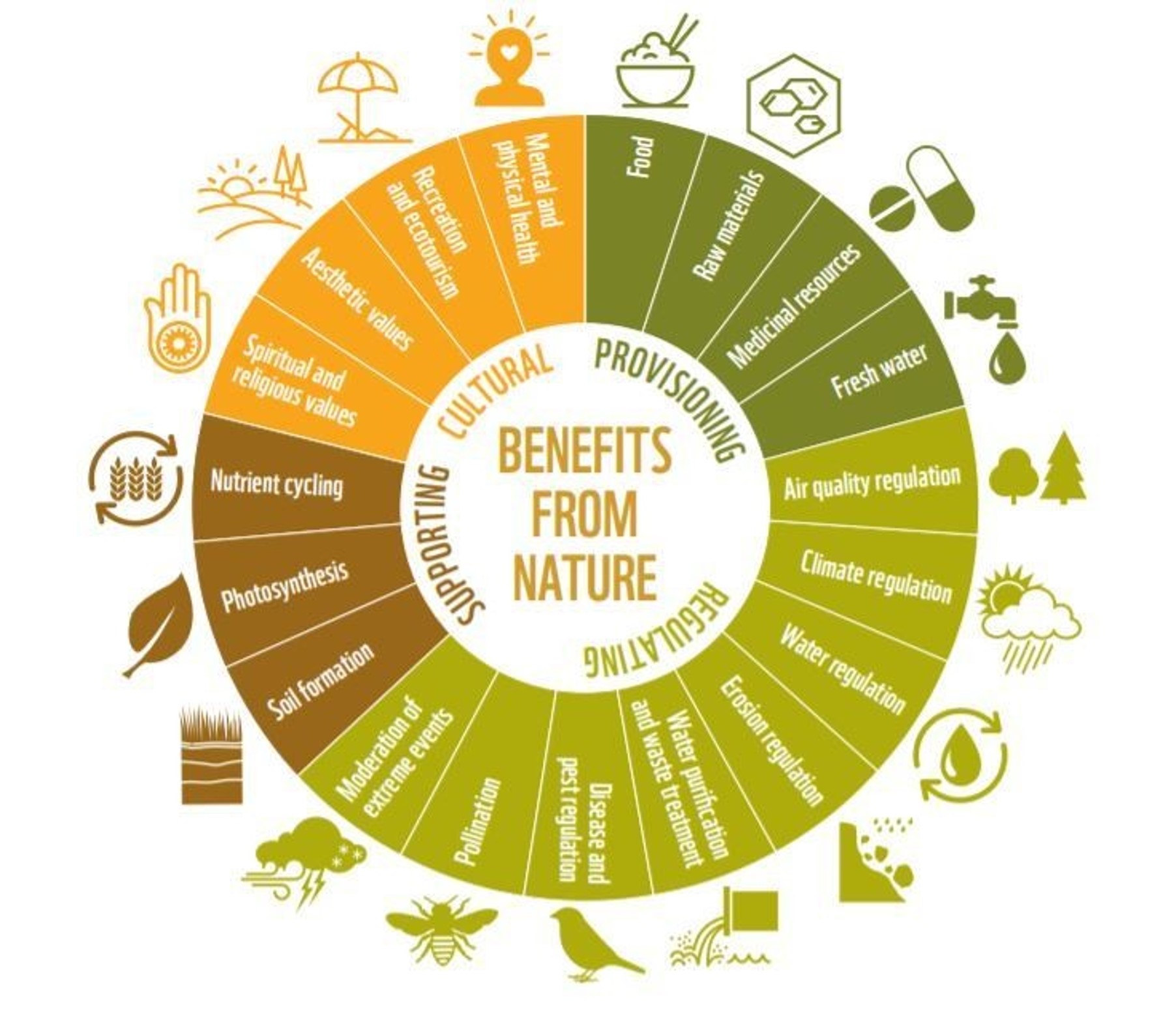
Valuing the benefits from nature
Nature and its component parts like soil, water and air are sometimes referred to as natural capital which provides us with services, and these can be valued. The stock of UK natural capital we are currently able to value is estimated at £1.2 trillion (2019).
- A few examples of these individual services: restoring around half of our peatlands to near natural conditions would return between £45 to 51 billion (2019).
- The health benefits of outdoor recreation in the UK are estimated to be between £6.2 and £8.4 billion in 2020, with 82 per cent of people agreeing that being in nature makes them happy.
- There are big land use changes going on, between 1990 and 2019 urban areas in the UK increased by 30 per cent enclosed farmland fell by five per cent.
These are big figures. What we really need is a consistent way to gather this information for individual projects so that we can start to develop the markets for these services.
The benefits for people
Benefits for people from nature in urban areas are of growing importance with 80 per cent of people living in urban areas.
- The Wildlife Trusts report for every £1 invested in health or social needs projects that connect people to nature, there is a £7 social return.
- Urban nature provides over £15 billion of benefits to the economy every year.
- The annual value of air pollution removal services by urban vegetation was around £800 million in avoided negative health impacts in 2021.
- It is estimated there were 2.1 million active visitors to green and blue spaces in urban areas in 2015, providing 74,000 additional quality-adjusted life years to society.
- £2.1 billion per year could be saved in health costs if everyone in England had good access to greenspace, due to increased physical activity in those spaces.
What’s the scale of the problem?
Climate and biodiversity crises
The UK is one of the most nature-depleted countries in the world, and in the bottom ten per cent globally and the worst G7 nation for biodiversity loss. Nature is key to mitigating and adapting to climate change, and supporting health and wellbeing.
State of Nature 2023 report showed that species across the UK are continuing to decline in abundance (the numbers of them), with numbers falling 19 per cent since 1970.
The approach over the past 70 years focuses on nature conservation, preserving pockets of nature. It hasn’t stopped the species number declining and a need to move towards nature restoration and nature recovery.
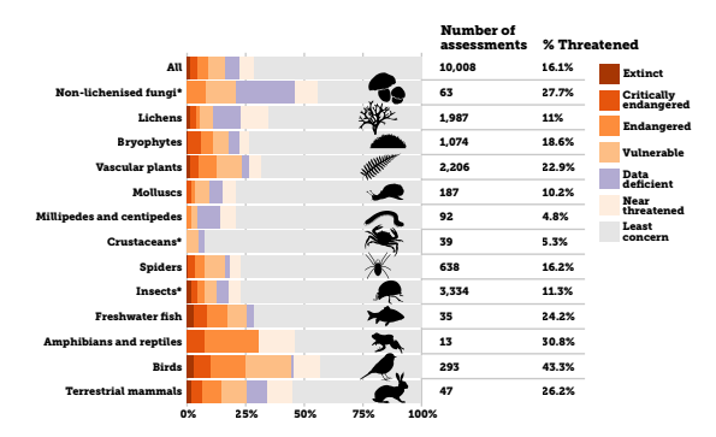
It's not just number species that are declining, its also the diversity of the species. 16 per cent of our species at risk of extinction. The legislation up to now hasn’t been working. Pressures on nature have continued to rise. We need to move towards nature restoration and nature recovery.
State of nature and opportunities in your area
-
natural capital accounts
-
local record centre
-
local plan and LNRS
-
core sites for nature
-
pressures on nature
-
impact of climate change
-
Green Infrastructure Framework
-
project examples.
Environment Act 2021 introduced a number of new duties for local authorities which are of relevance to nature recovery and biodiversity including:
- Biodiversity Net Gain All planning permissions granted in England (with a few exemptions) will have to deliver at least a ten per cent from November 2023 (S98-101)
- Enhanced duty for local authorities to conserve and enhance biodiversity (S102) and report on their actions (S103).
- Local Nature Recovery Strategy (LNRS). 48 Responsible Authorities were appointed by the Secretary of State (S105) to lead the development in each area working with a broad range of stakeholders.
- LPAs will need to comply with the above duty and have regard to the Local Nature Recovery Strategy in local planning policy and decisions (S102).
- LPAs also need to consider Protected Site Strategies (S110)
An amendment to the Levelling Up & Regeneration Act changed the need for plan makers to 'have regard' to LNRS to 'take account’ of LNRS. This duty applies generally and to specific elements of the LNRS, including the mapped proposals. This has not come into force yet but it is important to flag.
Environmental Improvement Plan updated and published in December 2025 following the findings of the Environmental Improvement Plan rapid review in January 2025, and the last in a series of annual progress reports, Environmental Improvement Plan annual progress report: April 2024 to March 2025
First published under the previous government, the Environmental Improvement Plan (EIP23) reviewed and updated the 25 Year Environment Plan and placed it on a statutory footing. It provided a delivery plan for the 25YEP framework and vision, setting out what the UK will do to improve the environment, within a generation.
The Planning and Infrastructure Act (2025) is a major piece of UK legislation designed to speed up and simplify the planning system in order to accelerate the delivery of new homes and critical infrastructure. Introduced as part of the government’s growth strategy, it aims to remove delays and reduce costs in planning approvals, enabling faster construction of housing, transport links, energy projects and water infrastructure. The Act is central to ambitions to build around 1.5 million homes and fast‑track decisions on nationally significant infrastructure, while also supporting clean energy goals and improving energy security.
Key reforms include:
- Streamlining approval processes for major infrastructure projects to reduce delays and uncertainty
- Reducing opportunities for legal challenges and simplifying consultation requirements
- Introducing more strategic, large‑scale planning through spatial development strategies
- Prioritising clean energy projects for faster grid connections and delivery
- Enabling quicker construction of reservoirs and electricity infrastructure
- Giving local authorities more flexibility (e.g. setting planning fees) to improve capacity and decision‑making speed [
Overall, the Act is intended to boost economic growth, attract investment, and ensure housing and infrastructure are delivered more quickly and efficiently across the UK.
The Land Use Framework for England 2026 'describes why change is needed and how it can be achieved if we use land more efficiently, for multiple benefits'
The National Planning Policy Framework 2026 Currently under consultation. PAS ran a series of consultation events on behalf of the Ministry for Housing, Communities and Local Government (MHCLG) including a 'deep dive' into Climate Change, Flood Risk & the Natural Environment a recording can be accessed 2026 Events | Local Government Association
Green Infrastructure Framework (2023) – voluntary – 40 per cent green cover in urban residential areas; 15 minutes to nature; develop a local green infrastructure strategy.
30 by 30 Pledge (2020) – protect 30 per cent of land/sea by 2030
Levelling Up and Regeneration Act. Secondary Regulations relating, including reform to the local plan system, the introduction of Environmental Outcome Reports and the duty to ‘take into account’ Local Nature Recovery Strategies (LNRSs) in development plans.
Mandatory Biodiversity Net Gain
-
Under the Environment Act 2021, from 12 February 2024 all planning permissions granted in England (with a few exemptions) have had to deliver at least ten per cent biodiversity net gain.
-
PAS has a comprehensive project to support Biodiversity Net Gain (BNG) for Local Planning Authorities
-
This will be achieved by delivering habitat onsite or, if that is not possible, through buying off-site biodiversity units.
-
Developers are required to follow the biodiversity gain hierarchy i.e. avoid harm, minimising, on-site compensation and then off-site.
-
Biodiversity Gain Plans and measurable habitats must be registered on Natural England's BNG Register.
-
BNG was required for small sites from 2 April 2024. However this is likely to change in 2025.
-
BNG is measured using Defra’s biodiversity metric and all off-site and significant on-site habitats need to be secured for at least 30 years.
Local Nature Recovery Strategies
A new system of locally led, transparent and collaborative spatial strategies for nature’s recovery covering the whole of England.
Each of the 48 Local Nature Recovery Strategies is led by a responsible authority in partnership with supporting authorities and the wider community.
This Environment Agency short video explains how the actions within the strategies to restore and create habitats will improve the water environment and support species recovery, deliver wider environmental benefits. It shows how these actions help people and wildlife adapt to climate change by reducing the impacts including flooding, drought, sea level rise and coastal erosion
Each strategy will:
- map the existing areas designated for biodiversity
- agree priorities for nature recovery
- map actions for delivering priorities in areas where they provide the best environmental outcomes.
- Local delivery will be through a variety of mechanisms including Biodiversity Net Gain and Environmental Land Management schemes.
What does LNRS mean for your local authority?
Drive collaborative action
- to bring new partners into nature recovery decision-making
- to collaboratively agree on priorities and locations for nature recovery.
Inform and evidence
- inform the preparation of local plans and direct developers to lower-value areas
- inform actions in development masterplans / public estate / region / infrastructure
- inform how to manage public green space for nature and people.
Plan how and where to invest
- direct investment in offsite Biodiversity Net Gain and statutory compensatory habitat
- target areas to work with landowners and land managers on nature recovery / direct agri-environmental scheme funding.
Promote nature recovery
- promote and better connect residents/communities to nature
- encourage /inform residents and community groups
- provide an evidence base for funding bids.
Green Infrastructure Framework
What is the Green Infrastructure Framework?
The Green Infrastructure Framework supports the greening of our towns and cities as part of the Nature Recovery Network. It sets out what good looks like for local planning authorities, developers, parks and greenspace managers and communities.
It provides tools to help plan and design green infrastructure networks that deliver multiple benefits. In addition an authority's LNRS can also help the authority plan and manage their green infrastructure.
The five main products in the Green Infrastructure Framework are:
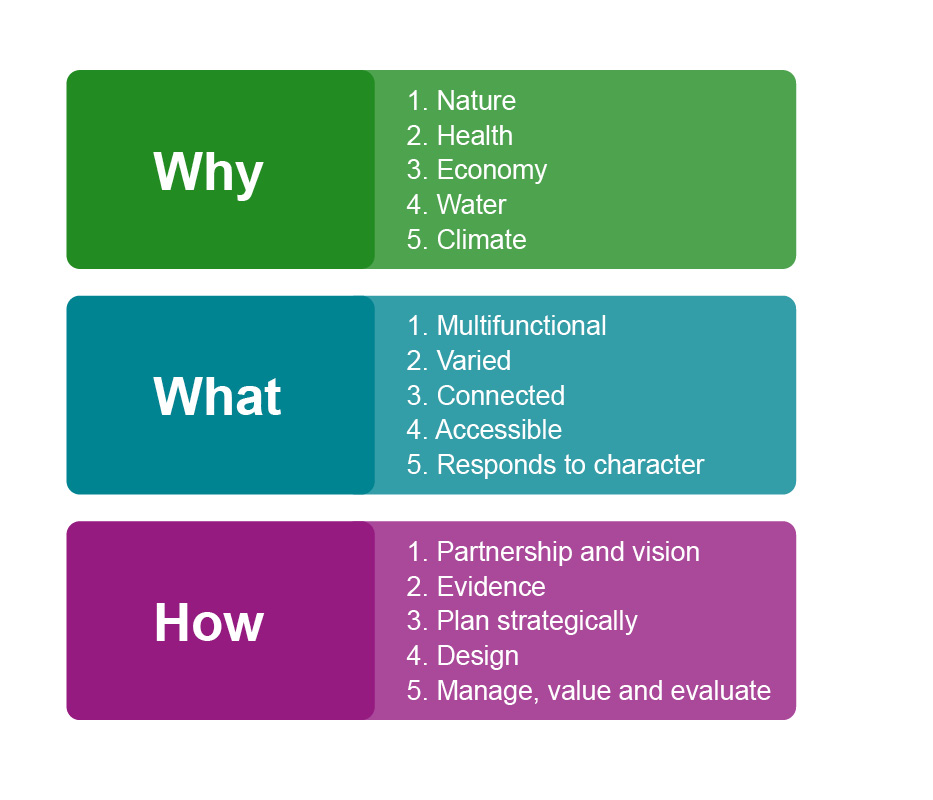
- Green Infrastructure Principles - Why, What and How of good green infrastructure.
- Green Infrastructure Standards - National standards for green infrastructure quantity and quality.
- Green Infrastructure Mapping - award winning interactive mapped datasets to support the standards.
- Planning and Design Guide - How to design good quality green infrastructure.
- Process Guides - How to apply the products in the Framework- for planners, developers and neighbourhood planners.
In addition, the Environmental Benefits from Nature Tool is designed to work alongside the Statutory Biodiversity Metric and the Green Infrastructure Framework and uses a habitat-based approach to estimate the direct impact of land use change across 18 ecosystem service services.
The Green Infrastructure Principles
What are the technical barriers to delivery?
We know that councils are delivering a range nature recovery activities from small scale quick wins to strategic landscape recovery projects and were keen to understand how they are being delivered across a council, what are the technical barriers, how are these being addressed and who needs to be engaged.
This might be for example - when looking to implement SuDS as part of highway improvement works and there are concerns raised about sightlines and drainage or the installation of a new rain garden in a school and there are concerns about access and safety. How are these concerns addressed?
| SERVICE | OPPOURTUNITY | BARRIER | SOLUTION |
| Climate change and net zero |
Wider buy in from communities Incorporate into Climate Change Action Plan |
Concreting over front gardens Biodiversity divorced from climate change – must do both |
Education campaigns Declare climate & ecological emergency |
| Corporate priorities | Corporate plan refresh for people and place living sustainably | Change of perception of working ways for officers | Providing vision & extending resource in gaps & knowledge |
| Economic development | Greener settings can be more attractive for companies to relocate/people to shop etc | Becoming the first example | Better quality places and homes |
| Estates, parks & recreation | Diversifying habitats in green spaces | Public perceptions that longer grass is unmaintained. | Public education campaigns |
| Flood risk management | Rewilding | Landowner buy in | Sharing effective methods |
| Health | Green social prescribing - partnership working | Who is going to fund? | Interested funders |
| Highways |
Highways drainage - nature based solutions. Diversifying verges Kerbside strategy - remove hard surfaces for SuDS, parklets - reclaim hard ground |
Highways engineers concerned about visibility at junctions, tree risk - roots etc. Concerns re loss of parking |
SuDS design guide Create parklets - street trees |
| Planning and housing | BNG to fund schemes - possible work with partners | Complicated and resource intensive | Have in house ecologists |
| Transport | Integrate nature into leisure strategy and line with cycle routes | Who is going to fund? | Use BDN and corporate money |
Upskilling teams
-
Upskilling internal teams through greater education and training initiatives will be essential if nature recovery principles and practices are to become established norms.
- There is a pressing need for training regarding the biodiversity net gain policy requirements as well as for further information regarding the benefits of delivering nature-based solutions.
- There is also a need for more specialised expertise in-house, particularly within Highways Departments and amongst contractors.
- Biodiversity Net Gain resources can be found through PAS provides on-going support for local planning authorities on dedicated BNG pages as well as CIEEM (the Chartered Institute of Ecology and Environmental Management) BNG resources
What types of policies can provide the basis for acting?
-
Need to reference real documents and show what is interesting and relevant about them and how they could be used to support delivery of an intervention for example corporate strategy, local plan policy, sustainable community strategy and National Park or National Landscape management plan.
-
How a circular approach informed by plans/ strategies in turn needs to be embedded in plans/ strategies to ensure delivery by different services in local authorities.
-
Identified projects/ priorities should usefully feed into the Infrastructure Delivery Plan (as this includes green/ blue infrastructure projects and associated funding).
-
What types of policy framework are required to make a lasting change?
-
Role and importance of LNRS.
-
How do local authorities work across other strategies and how do these work together such as catchment management strategies and protected sites strategies?
Key local authority plans and policies
These will have been identified as part of the development local nature recovery strategy and will include:
-
local nature recovery strategy
-
corporate strategy
-
green and blue infrastructure strategy
-
local plan and development plan documents
-
biodiversity plans
-
net zero and climate action strategy/plan
-
National Park & National Landscape management plans
-
community strategy
Why do personalities and politics matter?
Do you have the right people as champions?
Often where activities cross over multiple services and priorities they need champions and teeth and this needs to be politically framed. But they also need revenue and the lack of this can often be the driver.
Do you need to find a senior sponsor in the council such as a Chief Executive, deputy leader or portfolio holder to allow people to spend time on this.
-
Who do you need to speak to?
-
Are you pushing at open door?
-
Is it an environment lead or another portfolio holder?
-
Do you also need an officer?
Introducing climate champions at councillor and officer level has created a distinct change of culture at the council, with climate change and ecological impacts now considered in every report, in a similar manner to impacts on equality and finances.
When declaring a climate emergency in 2019, Cotswold District Council created a new councillor role: Cabinet Member for Climate Change and Forward Planning. Having this leadership role has boosted the authority’s efforts to meet its climate goals, which include an 80 per cent reduction in carbon emissions by 2030, to be achieved without offsetting or use of carbon credits. This means a real cut in emissions in the local area, rather than paying into (potentially distant) schemes to remove carbon from the atmosphere.
What is required of a nature champion?
In 2023 Councillor Tom Munro was appointed as Bolsover District Council Local Nature Recovery Champion to:
-
Inspire: Generate enthusiasm and awareness for the importance of Bolsover District’s natural environment within the Council and the wider community; and to stand up as a point of contact for support and information on local nature related issues from both the local community and others outside the authority.
-
Advocate: Promote opportunities that draw attention to the natural environment across Bolsover District and to help ensure that commitment to the proper care of the natural environment is embedded in all activities over which the authority has influence.
-
Influence: To influence those stakeholders around Bolsover District for the benefit of the natural environment.
-
Communicate: To be a voice within the Council to communicate the importance of Local Nature Recovery.
Local nature and its recovery is something I’ve always been interested in and so it is an honour to have chaired the Council’s inaugural Local Nature Recovery Summit.
Councillor Tom Munro, Local Nature Recovery Champion, Bolsover District Council
How to balance short term pain versus long term gain?
Within the context of local authority funding pressures how do you demonstrate the benefits and balance short term pain for long term gain (such as improved air quality, human health and reduced risk of flooding that are more difficult to quantify but essential for sustainable, healthy and more resilient areas)?
Here are some key headline messages that people can use to make the case.
- The UK is bottom 10 per cent globally and worst G7 nation for biodiversity loss. Nature is key to mitigating and adapting to climate change and supporting health and well-being.
- Over half (57 per cent) of the annual value of ecosystem services in England in 2020 was derived from cultural services, predominantly recreation and tourism (£12.4 billion) and health benefits (£5.5 billion) associated with this (ONS 2023).
- There are costs of not acting. It is estimated that the health and social care costs of air pollution in England could reach £5.3 billion by 2035 unless action is taken.
- Did you know? Urban nature-based solutions like green walls and roofs, sustainable drainage systems and street trees have the potential to provide around 30 per cent of the adaptation needed to protect our towns and cities from increased rainfall, flooding and heatwaves by 2030.
Local authority funding pressures
Councils in England face a funding gap of £4 billion over the next two years
Local Government Association, October 2023
-
Overwhelming decline in the funding of local authorities whilst responsibilities have remained the same or even increased.
-
The capacity of many local authorities to deliver public services has reduced, threatening those without a statutory remit.
-
In the absence of a formal mandate and dedicated funding, our natural environment is particularly vulnerable to changing budgets and shifts in government policy.
Making savings, securing funding, investment and generating revenue
How can local authorities make savings, secure funding and investment and generate revenue? What is the return on investment?
- Savings: alternative greenspace management and working across departments
- Funding: traditional funding routes, planning gain and developer contributions
- Investment and revenue: output-based payments for ecosystem services such as Biodiversity Net Gain and carbon
Using evidence to support the business case
How to demonstrate the benefits and balance short term pain for long term gain (such as improved air quality, human health and reduced risk of flooding that are more difficult to quantify but essential for sustainable, healthy and more resilient areas)?
How to convince service leads that have their own priorities and workloads, own savings to make to spend time and resource working on nature recover activities because they have a knock-on benefit for their priorities?
There is an extensive library of research reports on the benefits associated with nature recovery activities such as green infrastructure and nature based solutions.
Key headlines such as those set out in the slide here can be used as part of the evidence base to demonstrate the case when balancing short term pain for long term gain (such as improved air quality, human health and reduced risk of flooding that are more difficult to quantify but essential for sustainable, healthy and more resilient areas).
We particularly like “Making the case for investment in Green Infrastructure in Oxfordshire” produced in 2021 which we have taken a number of key headlines from and its important to note that the ROI will vary depending on the project.
There also the outputs from the Greater Manchester IGNITION project which peer reviewed over 300 studies and includes The Nature-based Solutions to the Climate Emergency report which is really helpful.
Existing economic studies on the value of Green Infrastructure suggest that a 4:1 Benefit-Cost Ratio (BCR) is a conservative/reasonable assumption That means for £1 invested £4 of benefit are generated.
- A one per cent increase in the amount of greenspace in a ward generates a one per cent increase of the value of a residential property in England.
- Planting of vegetation in streets can reduce street-level pollution concentrations by up to 60 per cent. Vegetation may reduce noise by as much as 50 per cent.
- People with good access to green space are 24 per cent more likely to be physically active.
- Sustainable drainage systems (SUDS) are half the cost of traditional drainage over a 60-year life span.
- During an extreme rainfall event green roofs can retain up to 90 per cent of rainfall.
- Green roof energy savings are 30 kilowatt-hours per square meter or 14 kilograms carbon dioxide per square metre or £5 to 6 square metre per year for heating and air conditioning.
Valuing the natural environment
As a core component of natural capital, biodiversity supports ecosystem services that benefit people and the economy. When thinking about what actions you could take and how to make the case you could consider the value of taking a Natural Capital approach.
A number of local authorities have also been using natural capital accounts to measure the benefits provided by their natural assets to its businesses, public services and residents. Not only do these measure the benefits provided by the natural environment but also provide decision makers at all levels with the tools and evidence to male more informed joined up decisions. These help the user to understand and explain the wide range of benefits flowing from the natural world to a range of.
So in the case of Greater Manchester the total value provided by the nature environment is at least £1billion each year.
- In terms of Air Quality Regulation: Vegetation improves air quality which prevents 370 hospital admissions each year and helps avoid 1,200 life years lost.
- Carbon Sequestration: 50,000 tonnes of dioxide of carbon taken out of the atmosphere each year by Greater Manchester’s woodlands and peat.
- Physical Activity: 135,000 people use green spaces to meet their physical activity guidelines, giving 4,600 Quality-adjusted life-years (QALY).
- Mental Health: 1 million people receive mental health benefits by accessing green spaces, giving a 120,000 point reduction on the General Health Questionnaire Index (GHQ).
If we do not continue to look after our natural environment then we risk losing these benefits with a consequent cost to society.
What are the funding needs, pressures and costs of doing nothing?
The need for urgent action
Over the last few years around 75 per cent of councils have declared a climate emergency, with many of these also declaring an ecological emergency. Meeting these commitments will require significant investment into low-carbon and resilient infrastructure.
-
urgent action is required to deal with increasing risks from climate change
-
safeguarding and strengthening nature is key to securing a liveable future
-
there is a narrowing window for action
-
cities: hotspots of impacts and risks, but also a crucial part of the solution.
Level of funding required
What is the level of funding required to bring about change and meet government targets? Green finance gap, public funding into nature and the need for private investment?
The Green Finance Institute and others estimate that the finance gap for nature is between £44 to 97 billion over the next ten years with a central estimate of £5.6 billion per year. Specifically, there is a £354 million finance gap in the UK for natural flood management. The finance gap is the difference between the amount of spending that is currently planned or committed, and the amount that is required.
Current environmental funding sources, mostly public and philanthropic grants, are unable to meet the need to prevent further decline of the natural environment. Such grant support will remain critical if we are to reverse the current crisis, but a significant increase in funding is needed to support the recovery of the natural world. The reform of public policy and an appropriate regulatory framework will also be crucial for both protection and restoration.