Doncaster, has spent the last three years working in partnership with local organisations to better serve our youngest children, aged 0-5, their families and educators.
Context
In Doncaster, we have spent the last three years working in partnership with local organisations to better serve our youngest children, aged 0-5, their families and educators. Our aim was to support young children to improve key skills including communication, language, and personal, social, and emotional development through joyful, creative, and accessible workshops.
This work is Tuneful Chatter and led by darts, our local creative health and learning charity, Cast, Doncaster’s theatre and performing arts venue, and the City of Doncaster Council’s Early Years Intervention and Prevention Service (EYIPS). Together, we secured £500,000 funding over three years from Arts Council England through their Place Partnership fund with match-funding from the City of Doncaster Council. Alongside this, each organisation committed their time, resources, and expertise for the duration of this three-year project.
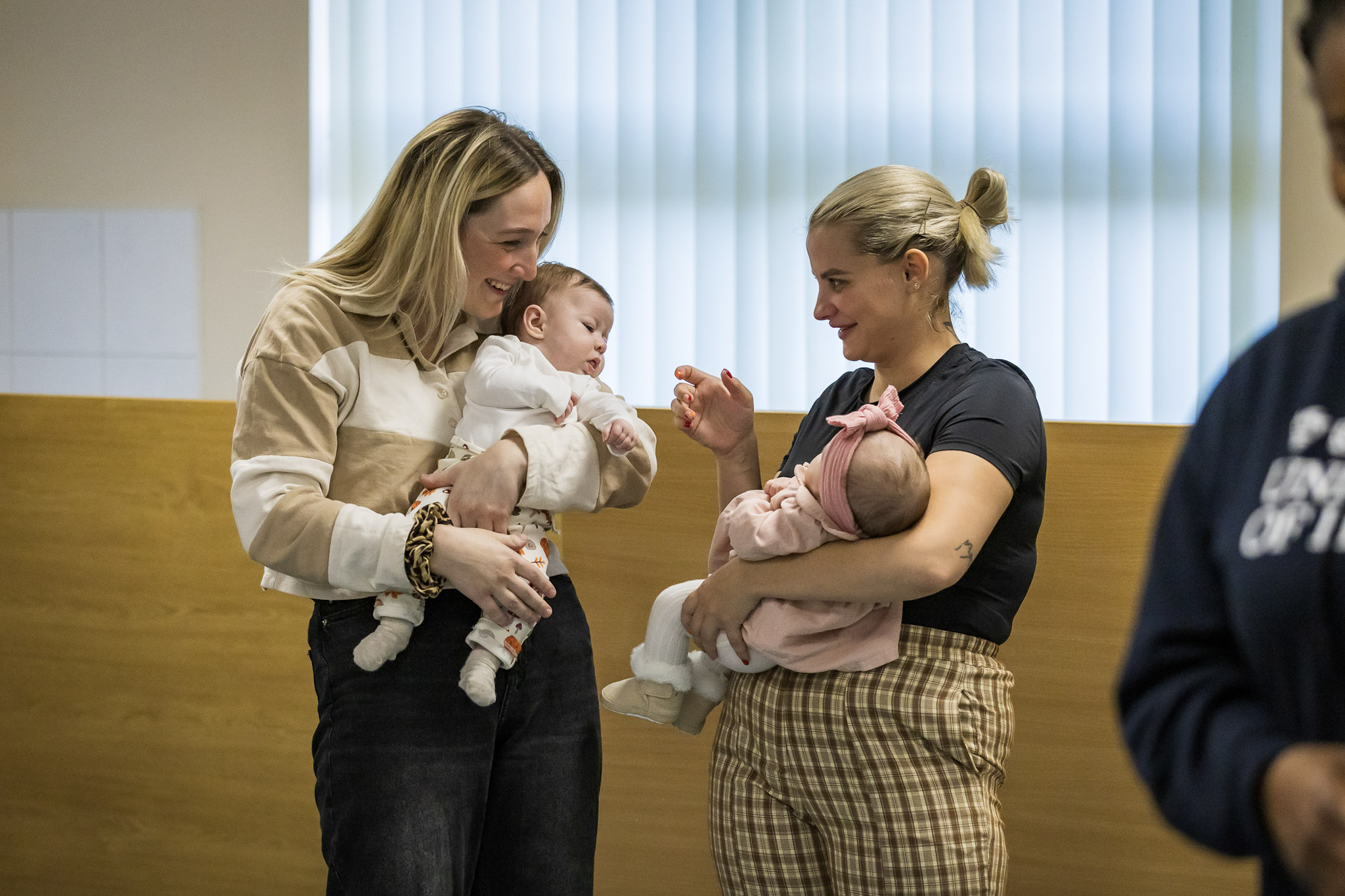
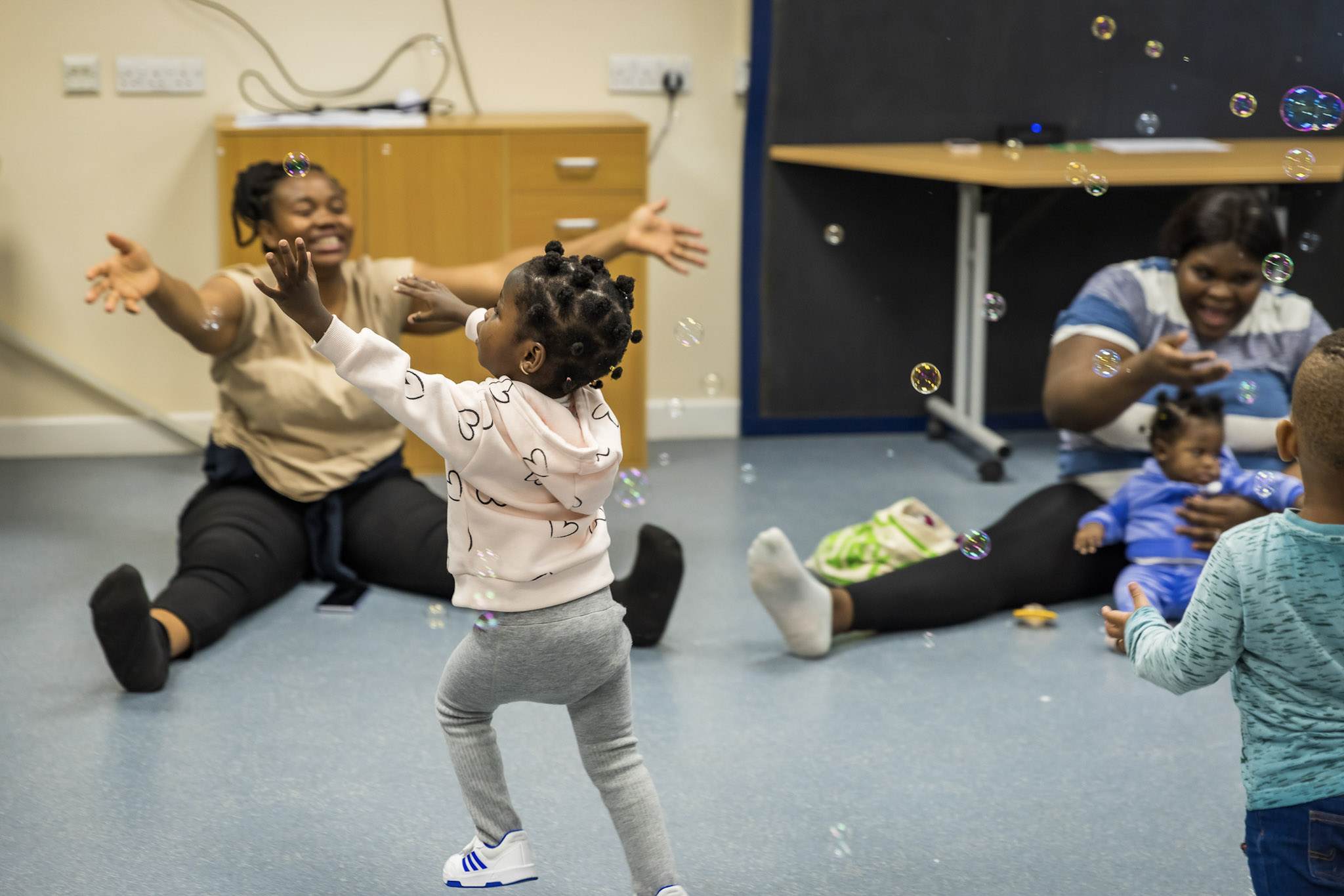
Tuneful Chatter is a programme of creativity activity, including dance, drama, and music, designed for children aged 0-5 and their grown-ups. Picture this: families enter a room in their local family hub, there is music playing softly in the background and the room has fabric, sponges, balls, and everyday items placed in the middle. You can see all sorts - and children are invited to explore with these props, before going on an adventure. It could be a jungle, or a bear hunt or to the seaside, but wherever we are going, we are going together. Parents and guardians are encouraged to join us on this adventure, meeting their children’s imaginations and being playful together. You can see more about Tuneful Chatter here.
Sessions have been delivered in partnership with primary schools, nurseries, family hubs and in arts venues. In an average term-time week, we are delivering 26 sessions across Doncaster. This work was also supported by our evaluation partner, Sheffield Hallam University, our critical friends at the National Literacy Trust and the families, educators and children who regularly inform this offer.
Challenge
Tuneful Chatter was designed in collaboration with early years experts, educators, artists, and creative specialists. Our aim was to respond to the challenges children and families were experiencing following the Covid-19 Pandemic. We wanted to support young children in becoming school ready through building key skills like listening, turn taking and sharing. We surveyed early years educators and specialists across Doncaster and our suggested aims were corroborated by their experiences.
To do this well, we needed to meet families where they were. We focused on a place-based initiative, with offers in local communities whether that be the city centre, far North or East Doncaster, and strengthened this offer by upskilling educators through CPD and partnerships with artists.
The challenges were many but can be broken down into three areas:
Quality of Delivery
We need to maintain the quality of the workshops while delivering many on a regular basis. We recognise that one negative experience can feel like a firmly shut door for the families who experience it. People needed to know what to expect in these sessions, even if a new artist was leading it. Furthermore, the early years educators and experts needed to see the value of this work. A critical element of this work was upskilling and supporting early years staff in nurseries, schools, and family hubs to embrace creative techniques, but this was only possible if they saw the value of the creative workshops for their pupils and children.
Communication
Communication was critical to the successes of Tuneful Chatter. In the consortium leadership, it was key we knew who was leading which areas, so that we could feedback honestly and respectfully and that we could make changes in response to this feedback. Communication remained key between teachers, artists, nursery leads and family hub staff. And most importantly, we needed to model excellent communication in and around sessions – taking on children’s and families’ feedback to develop and design effective and fun workshops.
Capturing Evidence
It was crucial we captured both quantitative and qualitative evidence effectively. We needed to adapt our evaluation methods depending on settings, for example, in family hubs, sessions were attended on a drop-in basis while in schools and nurseries, particular students or classes were engaging for a term, a school year or longer. The Early Years’ team led on tracking students against the Birth to 5 Matters framework, while Cast and darts developed case studies with individuals and reflected on quantitative data from sessions and partners.
Solution
It is important to acknowledge how crucial the funding from Arts Council England and City of Doncaster Council was to addressing these challenges. As we look ahead to this funding finishing, we can model a smaller offer because we have embedded systems, evidence of our successes and robust professional partnerships.
Quality of Delivery
To maintain the quality of workshops, we planned a staggered approach to increasing delivery over the first and second year. We began by delivering four sessions a week and steadily increased the range of settings up to 26 weekly sessions. Alongside this, we funded traineeships for six artists who were new to early years practice in three-month blocks. They began by acting as assistants and in 84% of cases, were working as lead artists by the end of their training. One trainee reflected, “The Tuneful Chatter traineeship was the one of the most valuable training experiences. My knowledge of Early Years, and my confidence in delivering across disciplines and working with parents and carers, has grown exponentially and I’m very grateful to continue to be involved with such an important project.”
We prioritised a culture of feedback. In the development days where early years staff collaborated with artists, we modelled sharing feedback and developing our practice together. Educators were then encouraged to inform artist planning and then saw the results of their feedback when artists adapted to best suit their children’s needs and their topic areas. Early years practitioners from all participating settings rated the sessions as at least ‘Great’ with 70% rating them as ‘Excellent’, in a recent anonymous survey.
Communication
The lead consortium partners have met at least every month throughout this project.
We designated clear areas of responsibility for each partner, and this informed how we reported back and who led on which next steps. As leaders, we responded to feedback and adapted our offer, including commissioning plays for young children and their families and changing to a drop-in set-up for our sessions at darts’ arts centre, The Point. Staff at schools, nurseries and family hubs and artists also saw their feedback was taken seriously; session times were adapted to avoid clashes with other offers in the Family Hubs while artists were offered support in developing an iteration of Tuneful Chatter for those who struggled with the larger group settings.
Capturing Evidence
Schools and nurseries have taken part in Tuneful Chatter at no cost, and we were able to stipulate in the agreement that capturing evidence was a requirement of this partnership. The Early Years team and darts made a commitment to termly support for partners who were capturing evidence, while artists have highlighted families, children and educators who may be interested in sharing case studies. We have also ensured there is always space to feedback in-person, through forms and anonymously to make sure we are hearing both positive and negative feedback.

Impact
At the time of writing, over 1500 Tuneful Chatter sessions have been delivered across Doncaster. In family hubs and the arts venues, we have seen attendances increase as word-of-mouth spreads, “I was telling my friend about Tuneful Chatter, and she’s come along with her daughter to give it a go!” In schools and nurseries, a sample of 80 children was identified to explore the impact of Tuneful Chatter. We mapped these children’s progress against the key learning outcomes for Personal, Social and Emotional Development (PSED) and Communication, Language and Literacy (CLL) as outlined in the Birth to 5 Matters Framework, reviewing this every term. At the start of the programme only 35% of sampled children were meeting age related expectations (ARE) for their communication and language (CLL) and 40% for personal, social, and emotional development (PSED). As of December 2024, these figures had improved to 68% nearly achieving ARE for CLL and 64% for PSED.
Case studies of children, families and educators highlight individual experiences too, and can be seen here. As one mum reflected on Hello Baby, the weekly session for parents/carers and babies at Cast, “Hello Baby has been such an amazing group for my little boy. When we first started coming, he was 5 months old and found all the baby groups very overwhelming. The artist tailored each session to suit all babies and has been a massive part in T’s confidence and development. Hello Baby is now T's favourite group. I would recommend it to anyone.”
More broadly, the impacts from this partnership continue to spread further. We have presented at and organised our own conferences, built professional networks with regional and national organisations and are committed to continuing this model of work moving forward. City of Doncaster Council values the creative industries and their offer, and we are exploring many other ways of connecting more closely. At Cast and darts, the offer to families and children is now fundamentally informed by the knowledge and expertise gained through these partnerships and work on-the-ground.
Lessons Learned
In the Tuneful Chatter sessions, we have learnt that it is crucial to model accessible play and activities for families and educators. Our best work has involved household, low-cost props with activities that can be reused and reimagined in home or school, without the presence of an artist. This informed the resources we developed to support creativity outside of sessions too. We have also prioritised time for parents/carers to make conversation, build relationships and have moments where they can observe their child’s creativity. While it is important that they are also playing with their child, it is also critical that they have opportunities to build new friendships and see their child’s successes in this work.
In family hubs, schools, and nurseries, we have seen staff embrace creativity. All practitioners were using some creative techniques in advance of Tuneful Chatter, but now embrace a wider range of tools. “I’ve learnt new ways of teaching” shared one teacher, “and we make the most of Tuneful Chatter in normal lessons now too! Using singing and stories to bring topics to life.”
As a consortium, we believe this project has modelled the importance of partnership and place-based working. By bringing our expertise and experiences together, we have strengthened each of our offers. New partnerships and ways of working have developed, from a Family Arts Network funded by the Family Arts Campaign to funding from Barnardo’s to develop a creative group for new parents in Mexborough, there are a myriad of ways this partnership continues to inform our work. We highly recommend getting to know your local arts organisations or voluntary sector, to explore experiences and areas of crossover and to see how a partnership could expand or inform your work.
Key contact
If you would like to find out more about Tuneful Chatter, please contact the lead consortium members. Alison Fleetwood at the Early Years Intervention and Prevention Service, [email protected]. Sarah Clough, Head of Participation at Cast, [email protected]. Sarah Eastaff, Director (Creative Learning) at darts, [email protected]