Key findings
Success of the community led approach
The pilot demonstrated the strong value of a community led approach facilitated by the LGA. The 22 Councils involved in pilot consistently highlighted the benefits of peer-to-peer collaboration, with 91 per cent rating the bi-weekly calls as very or extremely useful, and 78 per cent expressing similar views about the online hub. These spaces enabled councils to accelerate their readiness, share documentation, and collectively navigate assurance challenges, reinforcing the importance of open dialogue and shared learning.
Assurance and governance bottlenecks slow AI adoption
Assurance and governance processes emerged as significant barriers to innovation. Councils reported wide variation in how long it took to complete internal assurance, with only 14 per cent managing it in under two weeks, while 41 per cent took more than a month. Fragmented approaches to data protection and equality duties created delays and uncertainty, underscoring the need for more consistent and streamlined governance frameworks to support digital adoption.
The importance of free alpha stage pilots
The pilot also raised important questions about the sustainability of charging for alpha-stage tools. While Minute was provided free of charge, councils invested substantial time and resources to support its implementation. Introducing fees at such an early stage risks discouraging participation and undermining the collaborative spirit that pilots rely on. Instead, pilots should be framed as mutual learning opportunities, where value is shared between vendors and customers.
Variance in digital literacy amongst the workforce
Workforce digital readiness varied significantly across councils, with nearly two-thirds (64 per cent) rating workforce capability as at least a moderate barrier. In some cases, low levels of digital literacy affected staff engagement with the tool, and technical or usability issues led to disengagement. This highlights the importance of embedding change management and digital skills support into future rollouts to promote successful adoption and long-term impact.
Diverse preferences for scaling and continued use of Minute
When considering future scaling, councils expressed diverse preferences for hosting and delivery models. While 41 per cent favoured central government hosting and 23 per cent supported open-source approaches, none preferred commercial hosting. This suggests limited appetite for vendor led models and a need for flexible, council friendly deployment options that reflect local priorities.
Significant barriers for councils to participate in piloting activities
Understanding why some councils chose not to participate is essential for shaping more inclusive future pilots. Common reasons included resource constraints, digital fatigue, technical incompatibilities such as VPN restrictions or lack of single sign-on, and concerns about the tool’s maturity, scalability, and potential future costs. These insights offer valuable guidance for designing pilots that are accessible, adaptable, and responsive to the realities of local government.
Recommendations for collectively supporting innovation in local government
Further government support for AI pilots
Central government should actively support future pilots of sustainable AI tools in local government, building on the insights from the Minute pilot. These pilots must prioritise meaningful engagement and facilitation, as demonstrated through the LGA’s community-led approach, ensuring that local voices shape development. They should also proactively address the risks associated with alpha-stage deployment particularly around assurance, governance, and digital readiness to foster inclusive participation and build trust in emerging technologies.
Inclusive scaling strategy
Any scaling of the Minute tool must be designed to accommodate the full spectrum of digital maturity across the sector. This includes councils with limited technical capacity, ensuring that deployment models are flexible, accessible, and supported by appropriate onboarding and change management resources.
Clarifying open source for local government
A sector wide effort is needed to develop a shared understanding of what open source means in a local government context. This should include guidance on the skills, capacity, and governance structures required to adopt and maintain open source tools and explore models for shared ownership or central support.
Establish a national assurance framework
Develop a centralised assurance framework for AI pilots, co-designed with councils and informed by best practice from across the sector. This framework should include standardised templates for Data Protection Impact Assessments (DPIAs), Equality Impact Assessments (EqIAs), and consent processes, alongside clear guidance on legal, ethical, and operational considerations. By reducing duplication and streamlining assurance, councils can accelerate deployment while maintaining compliance. Crucially, this framework should also support vendors by clarifying expectations and requirements for engaging with local government, helping them align their tools with sector standards and build trust with public sector partners.
A focus on digital literacy
Digital literacy remains a significant challenge across government, without targeted action, it will continue to limit the effective adoption of AI tools and emerging technologies. To realise the ambitions set out in national policy and strategy, there must be a coordinated and sustained effort to upskill public sector practitioners at all levels. This means going beyond basic training to embed digital confidence, critical understanding of AI, and practical skills into everyday roles.
Introduction
This report shares the journey and key insights from a collaborative pilot involving the LGA the Incubator for AI (i.AI), the London Office of Technology and Innovation (LOTI), and 25 councils. The pilot tested Minute, a new audio transcription tool developed by i.AI.
The report’s main focus is the community led approach facilitated by the LGA. By adopting a pioneering cohort model, the pilot explored how councils can work together to overcome the challenges of adopting early-stage technologies especially in areas like assurance, governance, and operational readiness to accelerate innovation. We highlight the community building elements of the pilot, offering a broader perspective on its impact, lessons learned, and what this means for future AI adoption across the sector. This work builds on the LGA’s ongoing programme supporting councils with the responsible and safe deployment of AI over the past two and a half years. Full details are available on our AI Hub.
To support and validate the findings presented in our report, we drew on data from a questionnaire completed by 22 councils involved in the pilot (see appendix). The questions were collaboratively developed by stakeholders from the LGA, i.AI, and the Ministry of Housing, Communities and Local Government (MHCLG).
Introducing Minute
Following the government’s announcement of the Humphrey suite, interest from councils surged, particularly in the tools Minute, Consult, and Extract. In February 2025, engineers from i.AI showcased the suite to the LGA’s AI Practitioners Network, with a strong emphasis on Minute. The session drew over 150 local government officers, highlighting the strong level of interest from the sector.
Soon after, i.AI announced a small-scale pilot of Minute, selecting 25 councils (from 52 applicants) to participate in a six-week trial. Councils were selected based on the relevance of their proposed use cases with careful consideration given to achieving a balanced regional representation. Each council nominated up to three organisational leads to coordinate the pilot locally and put forward 25 users to participate and explore potential use cases within their authority.
To enable the pilot, i.AI partnered with the LGA to develop a strategic support offer, with additional input from LOTI. This included helping councils navigate and fast track the assurance process, consider internal governance mechanisms, foster peer learning, and create opportunities for councils to connect and share experiences. The selected councils first convened in April 2025, ahead of onboarding and adopting the tool.
An alpha stage pilot
An alpha stage tool is an early version of a product that is still under active development and testing. It typically includes core functionality but may be incomplete, unstable, or subject to change. Alpha tools are not yet ready for widespread use and are usually tested in controlled environments with a small group of users. The primary goal at this stage is to gather feedback, identify bugs, and refine the tool’s design and performance before moving to broader testing in the beta stage. For many councils this was the first time being involved in an alpha stage pilot as most product testing happens at Beta stage in local government.
Council deployment of Minute
Onboarding and using Minute
Councils were onboarded to Minute on a flexible, “when ready” basis. Each council notified i.AI once they had completed their internal assurance processes and were prepared to deploy the tool in specific use cases. This ensured that adoption was aligned with local governance requirements and internal readiness. Onboarding was managed locally, with each council supporting their selected users.
While i.AI initially planned a phased onboarding approach, it quickly became clear that councils were progressing at different speeds, particularly in relation to assurance and governance. In response, the strategy shifted to a more adaptive model, allowing councils to begin using Minute as soon as their internal assurance was in place.
To support adoption, i.AI delivered central training sessions, which many councils then adapted to suit their local contexts. Councils developed their own tailored training materials and delivery methods, embedding the tool in ways that aligned with their existing workflows and practices.
For example, Wokingham Borough Council enhanced its Minute trial with a comprehensive support package, including video tutorials, SharePoint-hosted guides, and onboarding sessions covering usage, support, feedback, and best practices. Internal communications and stakeholder engagement activities helped build awareness and secure buy-in across the organisation. Ongoing support was provided through weekly drop-in sessions and a dedicated Teams site. Feedback and usage insights were actively gathered using Microsoft Forms, Whiteboards, and Teams polls. Similar approaches were adopted by other councils participating in the pilot.
User feedback and practical use cases
Qualitative research conducted by i.AI found that councils responded positively to the Minute pilot, identifying a range of practical applications for the tool.
- Broad impact across councils: In testing with over 400 users across 22 councils, many participants reported saving time, improving the quality of their outputs, and gaining confidence in their work. Some users noted that Minute halved their notetaking time, while one council estimated up to a 90 per cent reduction in time spent recapping meetings, depending on the meeting type.
- Clear use case within social care: The pilot uncovered more than 40 distinct use cases where social workers were required to complete lengthy forms, reports, or assessments. This reflects a broader administrative burden in social services.
- Low and scalable technical running costs: On i.AI infrastructure, it currently costs £0.50 to transcribe a meeting using Minute, with total running costs under £3 per user per month. Notably, 50 per cent of infrastructure costs are fixed, meaning per-user costs will decrease as adoption scales.
- Strong appetite for continued use: Councils involved in the pilot expressed a clear interest in continuing with Minute. When asked how likely they were to recommend the tool, they gave an average rating of 8.5/10, resulting in a Net Promoter Score (NPS) of 45, a strong indicator of satisfaction and advocacy.
Throughout the pilot, councils explored a wide range of use cases for Minute, with deployment expanding as confidence in the tool grew. Minute was tested across various service areas including Adult Social Care, Children’s Services, Democratic Services, Finance and Procurement, Economy and Housing, Planning, and HR, and used by a diverse group of practitioners such as Service Managers, Commissioning Officers, Personal Assistants, and Administrators.
Councils trialled the tool in a broad spectrum of meeting types, including strategy sessions, safeguarding reviews, care governance meetings, leadership briefings, one-to-ones, training sessions, contract negotiations, supervisions, committee meetings, legal case reviews, procurement boards, and housing management discussions. This comprehensive testing helped councils assess where Minute was most effective and informed future deployment strategies.
General use versus specialised use case
The Minute tool was originally designed around a fixed set of embedded templates, each forming the foundation for its core outputs. These templates were intended to support specific meeting types and use cases. However, as more councils began using the tool, it became clear there was a strong appetite for a more versatile solution, one that could support a broader range of services and functions across local government.
Initially, councils requested bespoke templates tailored to their unique needs. While this feedback highlighted the tool’s potential, it also revealed the challenges of scaling highly specialised templates across a diverse user base. In response, i.AI focused on developing templates that addressed common, high-demand scenarios, striking a balance between usability and scalability.
During the cohort pilot, it became evident that councils were creatively repurposing existing templates to suit a variety of contexts. For example, some used the planning template to capture outcomes from other complex or lengthy meetings, demonstrating the flexibility of the tool when applied with local insight. This adaptive use sparked broader discussions within the community about the need for Minute to evolve beyond rigid, prescriptive formats.
As a result, the approach to template design began to shift. Rather than viewing templates as fixed solutions, they are now increasingly seen as adaptable frameworks, starting points that councils can shape to fit their specific workflows and service areas. This evolution reflects a growing recognition that flexibility and local ownership are key to embedding AI tools effectively in public sector settings.
Support provided by the LGA
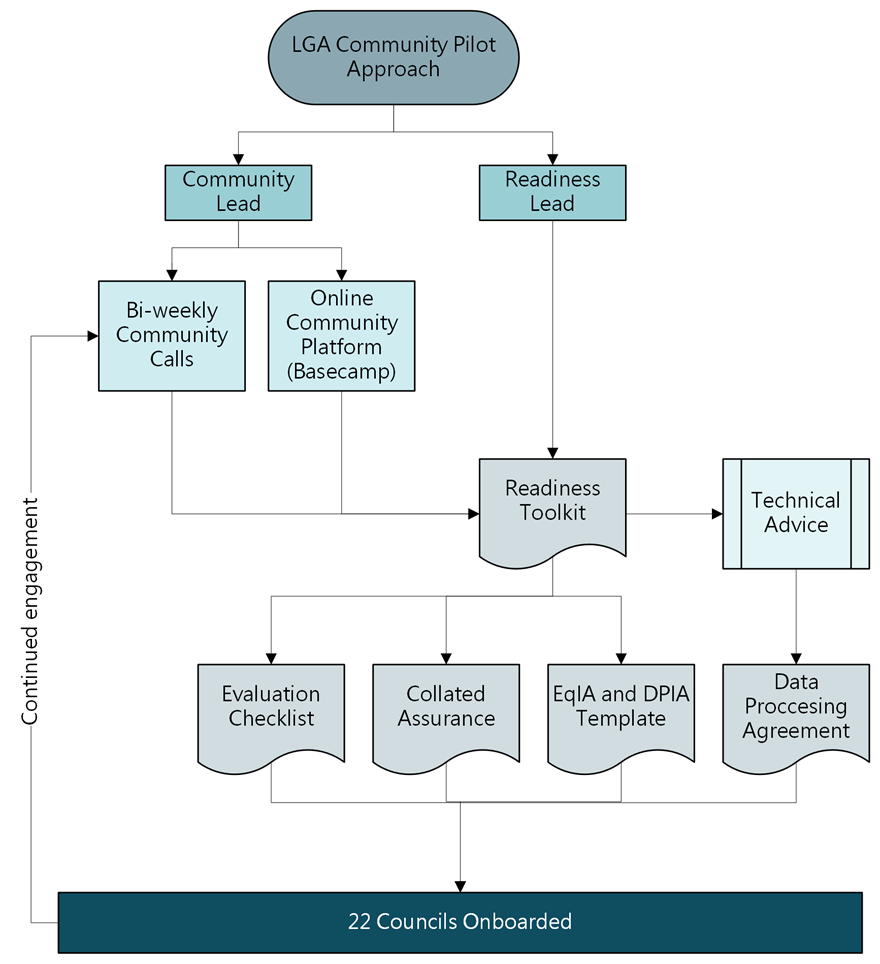
To support the successful delivery of the pilot, the LGA invested in several key components of the programme (see Figure 1 above). Working in collaboration with partners, we developed an innovative community led approach designed to keep councils engaged, informed, and supported throughout the process. The LGA also played a pivotal role in facilitating collaboration across government, ensuring that the unique context, challenges, and nuances of local government were clearly understood and effectively communicated.
Two dedicated advisers supported the pilot. One adviser focused on helping councils prepare for adoption by leading on readiness and assurance processes. This included developing practical guidance, sharing key templates such as DPIAs and EqIAs, and coordinating closely with i.AI to ensure timely responses to council queries.
The second adviser led on community engagement. Their responsibilities included organising and running bi-weekly community meetings, curating agendas, facilitating peer discussions, co-managing the online collaboration hub, and feeding insights from councils back to i.AI to inform ongoing tool development.
In addition to this hands on support, the LGA provided specialist technical input on governance, with particular support from LOTI. This was especially important in shaping the central Data Processing Agreement (DPA) (see appendix), ensuring that councils had access to expert advice on complex information governance issues and could adopt the tool with confidence.
A community approach
A central feature of the Minute pilot was the LGA’s deliberate development of a community led model designed to support councils in collaboratively navigating the challenges of testing an early stage alpha tool. Through continuous engagement with officers across local government, the LGA identified the strong value of peer to peer learning and collective problem-solving.
This community not only enabled meaningful collaboration between councils but also created a vital link between central and local government. It provided central teams with direct access to the unique and often complex realities of local authority operations, helping to shape more informed and responsive approaches to digital innovation.
Bi-weekly meetings
As part of the pilot the LGA facilitated open sessions every two weeks for council leads, creating a space for discussion, learning, and collaboration. These informal meetings encouraged participants to ask questions, share best practices, highlight innovative use of Minute and explore emerging challenges together. The sessions helped build trust across the network and enabled rapid feedback loops that supported continuous improvement.
Discussions covered a wide range of topics including evaluation approaches, governance processes, tool usability, and iterative feedback to the i.AI team. Representatives from i.AI regularly joined these sessions, giving councils the opportunity to engage directly with central government colleagues and contribute to shaping the development of the tool in real time.
Online community platform
To complement the regular meetings, LOTI established an online collaboration space using Basecamp, which was facilitated by the LGA. Councils used the platform to share updates, raise issues, and access key documentation and examples of best practice. This online hub became a central channel for communication, ensuring all participating councils remained informed and connected throughout the pilot.
Readiness and assurance support
As part of the pilot support offer, the LGA provided councils with tailored guidance, coordination, and practical assistance to help them prepare for onboarding and make the most of the Minute tool during the pilot period. This pilot was distinctive in that Minute was offered by central government in its alpha stage, free of charge and without a formal contract with participating councils.
Given this unique arrangement, councils needed to adapt their assurance processes. Traditional procurement pathways and standard risk management methodologies did not apply, requiring local teams to take a more flexible and collaborative approach to assessing readiness and ensuring appropriate governance.
Readiness checklist
To further support councils during onboarding, the LGA developed the Minute Pilot Council Readiness Toolkit in collaboration with LOTI and early adopter councils such as Wokingham Borough Council. Building on the principles outlined in our Responsibly Buying AI guide, the toolkit offered a structured checklist and practical guidance tailored to the specific challenges of implementing transcription tools.
It addressed key areas such as consent, issue logging, equality monitoring, feedback loops, and staff training, with a strong focus on upskilling and supporting those directly affected by the tool. The toolkit was refined in real time with input from participating councils, ensuring it remained relevant and responsive to their operational needs.
Governance templates
Alongside the Readiness Toolkit, the LGA made additional resources available via the Basecamp platform to support councils with assurance processes. EqIA and DPIA templates, which councils could adopt and adapt to suit their local contexts.
These templates were generously shared by Wokingham Borough Council, who had already completed their internal assurance work after trialling the tool ahead of the formal pilot. Their contribution reflected the collaborative spirit of the pilot, enabling shared learning and reducing duplication of effort across participating councils.
Evaluation checklist
From the outset, councils placed a strong emphasis on evaluating the Minute tool to understand its effectiveness and potential for long-term use. Early community calls featured councils such as West Berkshire sharing their evaluation plans, including the criteria they intended to use. The LGA gathered these contributions and consolidated them into a comprehensive evaluation framework, helping to guide consistent assessment across the pilot.
Throughout the programme, councils provided direct feedback to i.AI, which played a key role in shaping the development of the tool. This iterative process enabled continuous improvement and led to the release of Minute version 2 before the pilot concluded.
Many councils have since completed full evaluation reports, offering valuable insights into how the tool performed in real-world settings. These reports have directly informed this wider programme review and are helping to shape the future development of Minute, ensuring it continues to meet the evolving needs of local government.
Reflections and lessons from the pilot
This section summarises the key findings from the post-pilot questionnaire, alongside reflections from the LGA team. All councils that participated in the pilot completed the questionnaire, providing a comprehensive and representative view of how the programme was received. The insights gathered offer valuable evidence on the impact of the pilot, the effectiveness of the community-led approach, and the perceived benefits and challenges of using the Minute tool.
The success of the community approach
The community led approach was central to the success of the Minute pilot, fostering collaboration, accelerating progress, and strengthening relationships between local and central government. A key factor in making this model work was the LGA’s active coordination role. We worked closely with both the participating councils and the i.AI team to ensure the pilot was efficiently run, identifying where additional support was required, facilitating communication, and helping to resolve issues quickly.
The two primary channels, bi-weekly online meetings and online hub (Basecamp), helped to maintain regular contact with participating councils. These channels played a key role in keeping councils informed, connected, and engaged throughout the process.
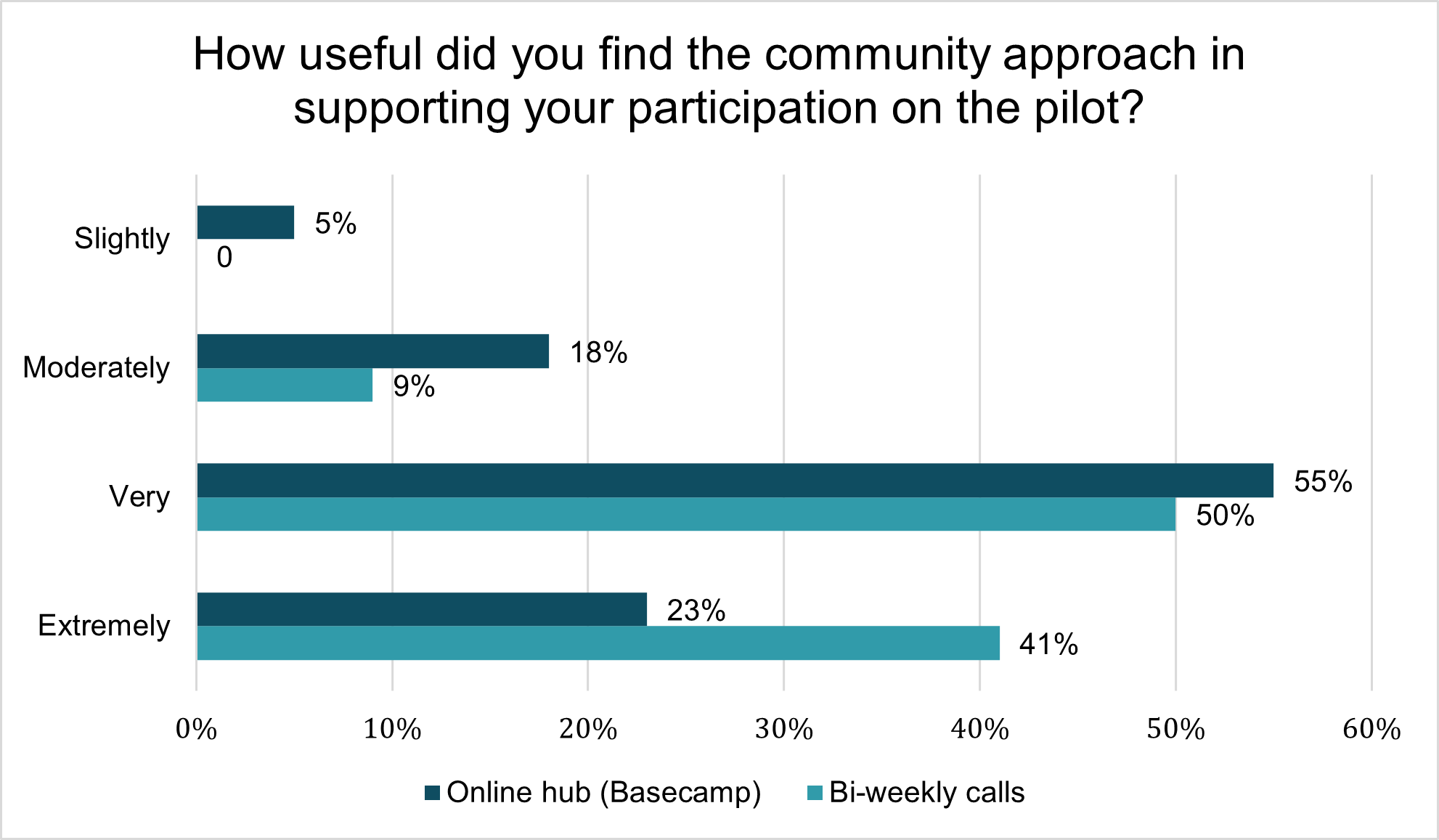
Many councils found the consistent communication and shared resources helpful in supporting their involvement. The bi-weekly calls were particularly well received, with 91 per cent of respondents rating them as very or extremely useful, and the remaining 9 per cent as moderately useful. Similarly, the online hub was considered very or extremely useful by 78 per cent of councils, moderately useful by 18 per cent, and slightly useful by 5 per cent.
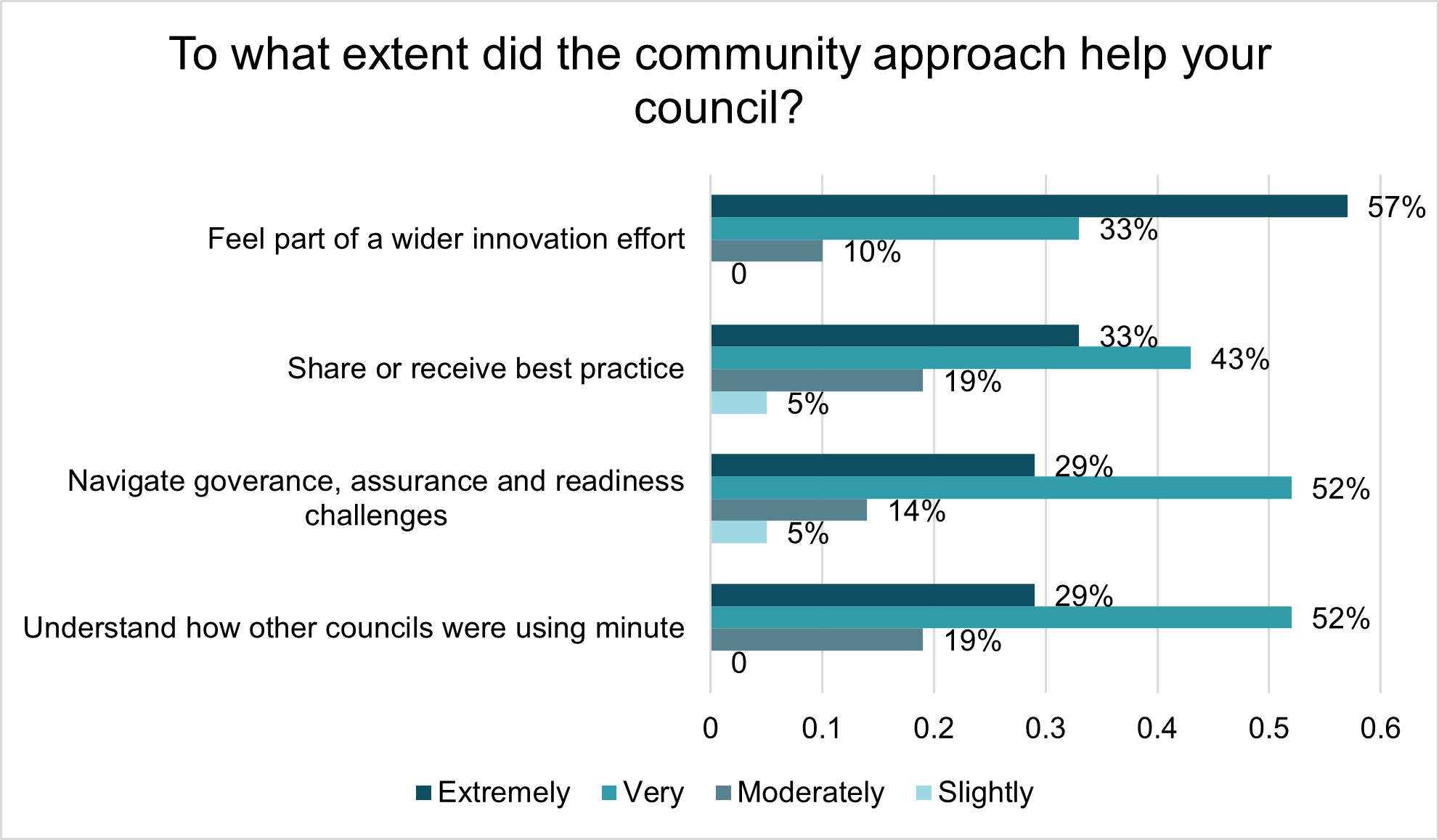
The figure above summarises how helpful councils found the community led approach across four key areas following the pilot. Overall, the approach was viewed as highly beneficial, particularly in fostering a sense of collective innovation, peer support, and shared learning:
- feeling part of a wider innovation effort was the most positively rated area, with 90 per cent of respondents selecting extremely or very helpful
- sharing and receiving best practice also scored strongly, with 76 per cent rating it extremely or very helpful
- navigating governance, assurance, and readiness challenges was seen as valuable, with 81 per cent selecting extremely or very helpful
- understanding how other councils were using Minute received similarly high ratings, with 81 per cent of respondents finding it extremely or very helpful.
The community led approach delivered several important outcomes. Engagement remained consistently high throughout the pilot, with 22 of the original 25 councils continuing to participate actively demonstrating strong commitment and sustained interest. i.AI fully embraced this model, recognising the value of regular touchpoints and a shared online space. This setup enabled responsive feedback loops and helped build trust between councils and central government colleagues.
Councils were able to accelerate their readiness by sharing documentation, processes, and practical insights. Peer-to-peer support reduced duplication of effort and helped councils overcome common assurance and deployment challenges more efficiently. The pilot also surfaced the operational nuances of local government, improving central government’s understanding of how best to engage with councils. It highlighted practical ways to strengthen communication and collaboration across both levels of government.
This collaborative approach was central to the pilot’s success. However, facilitating such engagement required significant resource from the LGA. The team played an active role in curating regular touchpoints, managing the online platform and providing technical expertise particularly around complex information governance issues.
The charging model for pilots
The Minute pilot was provided free of charge to participating councils, which was critical to enabling broad engagement and meaningful collaboration. This approach recognised the reality that alpha-stage tools are still in development, often subject to change, and may carry risks when tested in live service environments. Councils involved in the pilot contributed significant time and resource to support deployment, manage assurance, and provide feedback, often while navigating unpredictable outages or usability issues that can impact service delivery.
Despite this, we’ve heard from several councils that they have previously been asked to pay to participate in pilots of early-stage technologies. This raises concerns, particularly when the product is not yet fully formed and councils are effectively acting as co-developers. Charging for access in these circumstances not only places financial strain on local authorities but also risks discouraging participation in innovation efforts.
Moreover, vendors benefit substantially from pilot engagement. Councils provide rich, real world insights into how tools perform, where improvements are needed, and how products can be adapted to meet public sector needs. These insights can give vendors a competitive edge in the market. When pilots are treated as commercial transactions rather than collaborative learning opportunities, it undermines the spirit of partnership and slows down sector wide progress.
Instead, pilots should be framed as mutual value exchanges, where councils offer expertise and feedback, and in return, gain early access to promising technologies. This model fosters trust, accelerates development, and lays the groundwork for scalable, sustainable adoption across the sector.
Barriers faced by councils
Although the pilot overall has been successful and proved that alpha stage pilots can work in the council sector, councils had to overcome several barriers to maintain participation in the pilot. Figure 4 below summarises comments from the questionnaire that describe the barriers councils faced during the pilot.
|
Theme |
Barrier |
Enabler |
|---|---|---|
| Governance | DPIA delays, lack of initial assurance | National frameworks, community approach |
| Technical | Integration, VPN, audio quality | Workarounds, internal solutions |
| Workforce | Low digital literacy, resistance | Training, leadership support |
| Engagement | Poor feedback, wrong user selection | Flexibility in user choice |
| Deployment | Hosting costs, tech stack | Service-based rollout model |
Figure 4: Summary of barriers as described in questionnaire
Although councils faced a myriad of challenges the collective nature of pilot, enabled the group to overcome several of the barriers via the sharing of best practice and peer to peer learning.
Assurance as a barrier to innovation and agility
One of the most consistent challenges identified during the Minute pilot was the impact of assurance processes and internal governance on the pace of innovation and deployment. While these processes are essential for ensuring safe, responsible use of AI and meeting legal compliance requirements, they often became a bottleneck for councils eager to test and adopt new technologies.
Addressing these challenges required significant input from both the LGA and i.AI, who worked closely with councils to respond to a wide range of queries particularly around data protection, risk management, and legal assurance.
The time needed to complete internal assurance processes varied considerably across councils. Some were able to progress within a few weeks, while others required several months to navigate their internal pathways. This variation is illustrated in Figure 5 below.
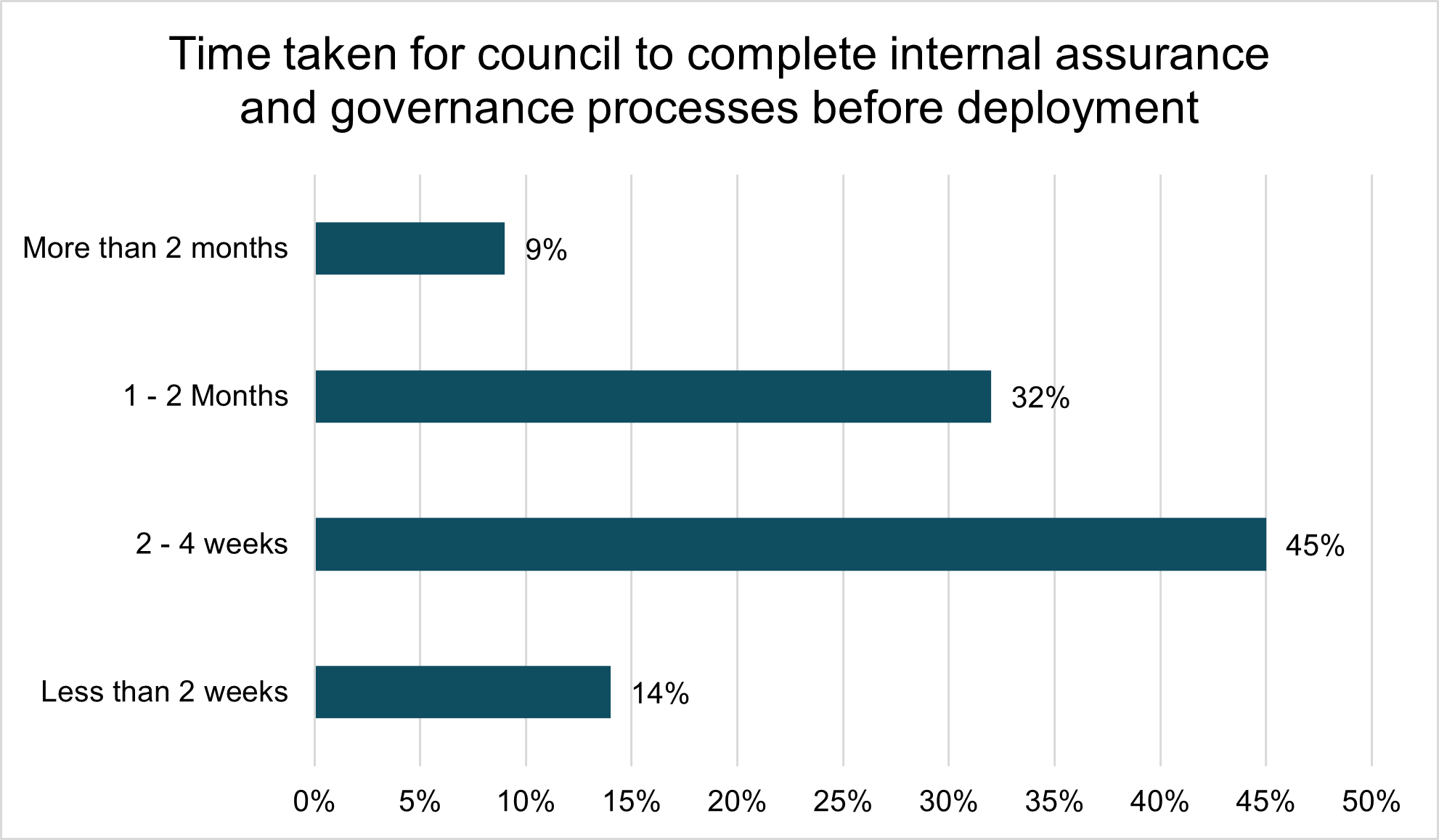
Each council approached assurance in its own way, often raising similar data protection and cyber security questions but framing them differently—a common challenge across local government. Some councils focused on highly technical issues, while others concentrated on broader governance considerations. This variation highlighted the sector’s fragmented approach to interpreting cyber security requirements, applying data protection law, and meeting the Public Sector Equality Duty (PSED). For example, councils adopted different consent models: some required explicit consent for transcription, while others relied on lawful alternatives. These inconsistencies in internal processes often delayed decision making and, in some cases, postponed full participation in the pilot.
Assurance and governance were further complicated by the fact that Minute was still in development. Standard risk management measures, such as penetration testing and cyber security certifications, had not yet been completed. Although the tool was developed by government for government, using an alpha-phase AI solution placed greater responsibility on individual councils. This likely contributed to the wide variation in assurance timelines and the diversity of questions raised by council officers.
Delays were often compounded when information governance (IG) teams were not engaged early or fully aligned with the pilot’s objectives. In some cases, there was a disconnect between pilot leads and those responsible for sign-off, driven by a lack of shared understanding about the tool’s purpose, functionality, and data handling. Without a common language or framework, governance discussions became more complex and time-consuming. Councils frequently grappled with issues such as identifying who should be involved in assurance, determining who needs to be kept informed, and understanding what responsible deployment looks like in practice. Reframing assurance as an enabler, rather than a barrier, could help shift this mindset and accelerate safe, scalable AI adoption.
Another key barrier was the lack of shared resources across the sector. Many councils started from scratch, drafting their own DPIAs, EqIAs, and consent forms. The pilot addressed this by encouraging the sharing of templates and documentation, which was widely welcomed. There is a clear appetite for more collaborative approaches to assurance and compliance, enabling councils to build on each other’s work rather than duplicating effort.
Governance templates
The governance templates proved highly valuable during the pilot, providing councils with a strong starting point that could be adapted to their internal procedures and local contexts. This support was reflected in the feedback: 81 per cent of councils reported that the community-led approach helped them navigate governance, assurance, and broader readiness challenges. As a result, many councils were able to complete and approve their EqIAs and DPIAs ahead of the pilot launch.
As one council representative noted:
“We developed our DPIA and governance approach based on information available in Basecamp, which was extremely helpful early in the trial.”
To further support this process, the LGA hosted a dedicated session exploring these documents in depth. Assurance and compliance remained a recurring theme throughout the pilot, as councils worked through the complexities of participating in an alpha-stage deployment. As the tool evolved, both the EqIA and DPIA required updates. The LGA supported councils in revising these documents and iterated the templates to make them more flexible and easier to adapt. This approach helped minimise disruption and maintain momentum as the pilot progressed.
In addition to using the shared templates, several councils contributed their own documentation to benefit the wider community. For example:
- North Yorkshire Council shared its completed Equality Impact Assessment
- Wokingham Borough Council provided consent form templates
- Dorset Council contributed a process map outlining its internal approval pathway for deploying Minute.
These resources offered practical examples and valuable insights, helping other councils shape their own approaches and adopt the tool safely and responsibly.
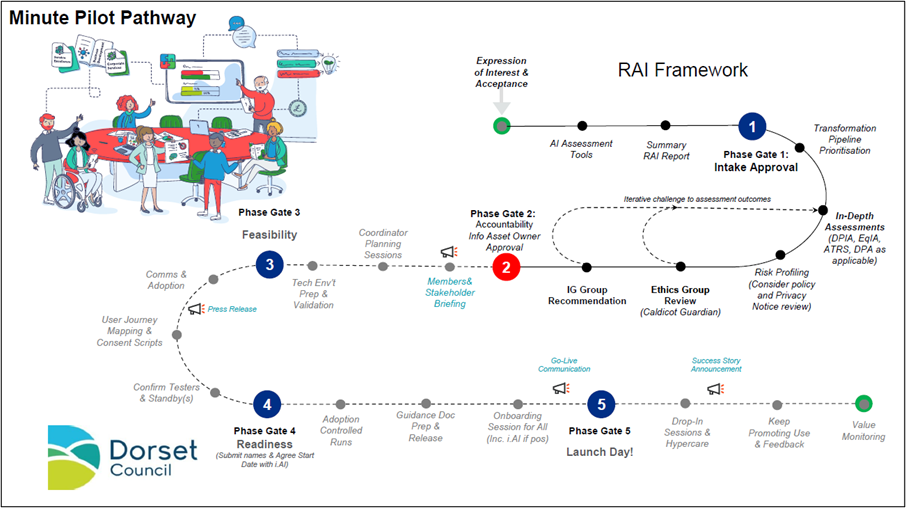
Figure 6 illustrates Dorset Council’s Minute Pilot Pathway, which demonstrates the nuanced process of launching an alpha-phase AI tool in a local authority setting. It reflects best practice in the safe, responsible, and strategic adoption of AI within the public sector.
The sharing of materials enabled councils to better understand the assurance and compliance landscape and tailor their processes accordingly. This collaborative exchange not only accelerated internal approvals but also fostered a culture of innovation, openness and mutual support. As the pilot progressed, these contributions continued to shape discussions around assurance and compliance, reinforcing the value of collective problem-solving in overcoming common challenges.
Workforce readiness
The importance of digital skills emerged as a recurring theme throughout the pilot, reflecting broader workforce challenges across the local government sector. While the Minute tool offered significant potential, its successful adoption depended not only on technical readiness but also on the digital confidence and capability of staff.
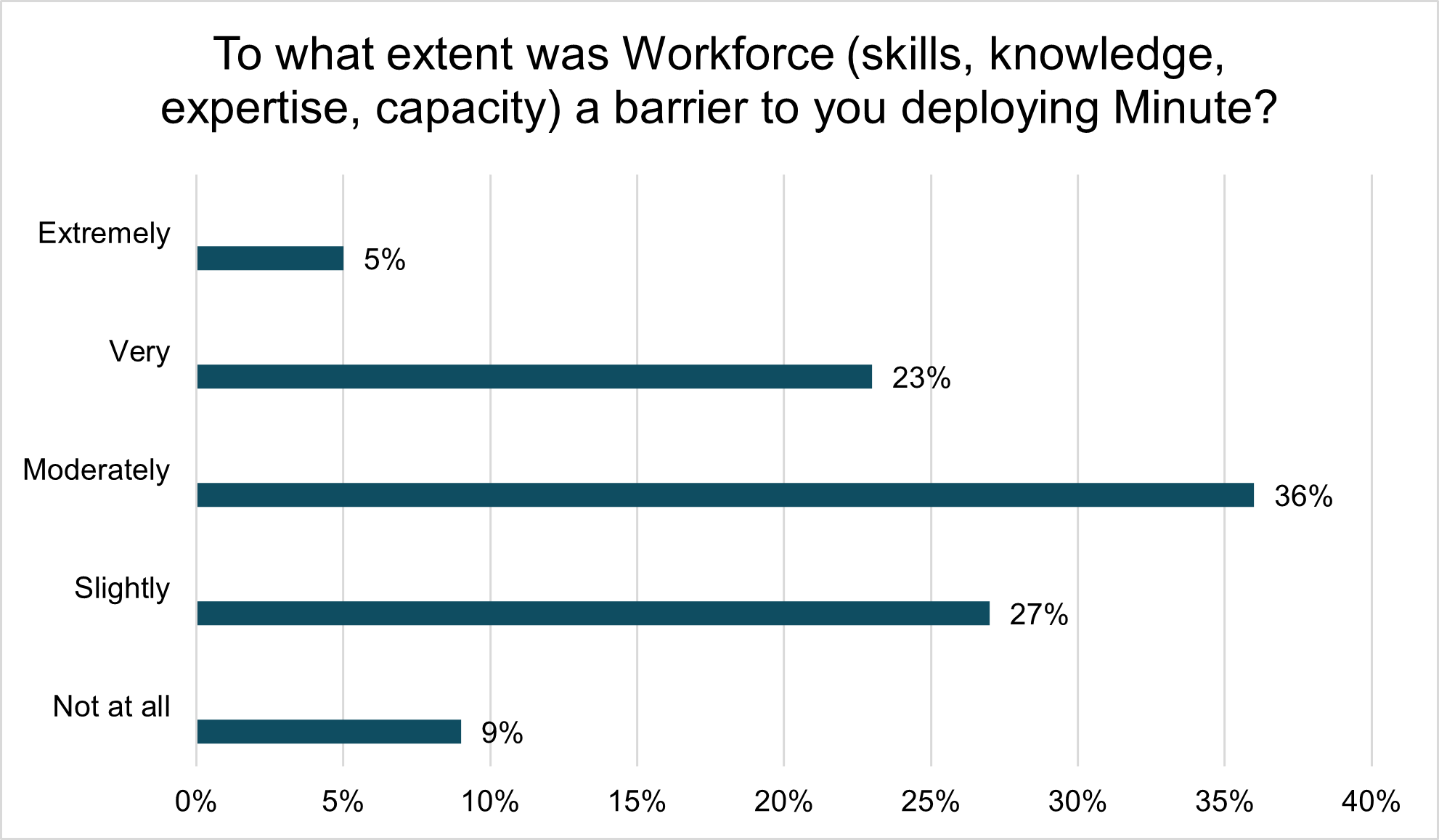
As shown in figure 7, many councils had challenges with workforce capability, with nearly two-thirds (63 per cent) rating it as at least a moderate barrier. Some councils reported difficulties with user retention during the development phase, particularly when technical issues or usability hurdles arose. In several cases, a lack of digital confidence or understanding of the tool led to disengagement among staff. As one council representative observed:
“Workforce capability has been an issue but has varied across teams. For example, some staff didn't know what a 'browser' was to know how to use the browser-based version of Teams. These issues are beyond i.AI's control, I think, and a long-term issue for us as a council.”
These challenges placed a significant burden on council leads, who often had to invest additional time and effort in re-engaging users, troubleshooting issues, and rebuilding momentum. This experience highlights a critical lesson: deploying AI tools is not just a technical exercise it requires strong change management and investment in digital capability.
Future rollouts will need to embed structured support for workforce development, ensuring that councils are equipped not only with the tools but also with the skills and confidence to use them effectively. This could include targeted training, clear user guidance, and practical resources to build digital literacy across all levels of the organisation. Without this foundation, the benefits of AI adoption risk being unevenly realised, reinforcing existing capability gaps rather than closing them.
Scaling challenges
Throughout the pilot, i.AI hosted the Minute tool for participating councils, while discussions continued on how the solution could be scaled across the local government sector after the pilot. Since the pilot’s launch, MHCLG has established a new AI for Local Government division. i.AI and the LGA are now working closely with this division to explore options for scaling, governance, and sustainable costing models for Minute.
As the trial progressed, interest within the local government community grew significantly, with many councils keen to understand how Minute could be deployed more broadly and integrated into their existing systems. However, views on the preferred approach to future hosting and deployment varied across councils, reflecting differences in local priorities, technical capacity, and governance requirements.
The figure below illustrates the range of perspectives among the 22 councils that participated in the pilot regarding how they would like to continue using Minute.
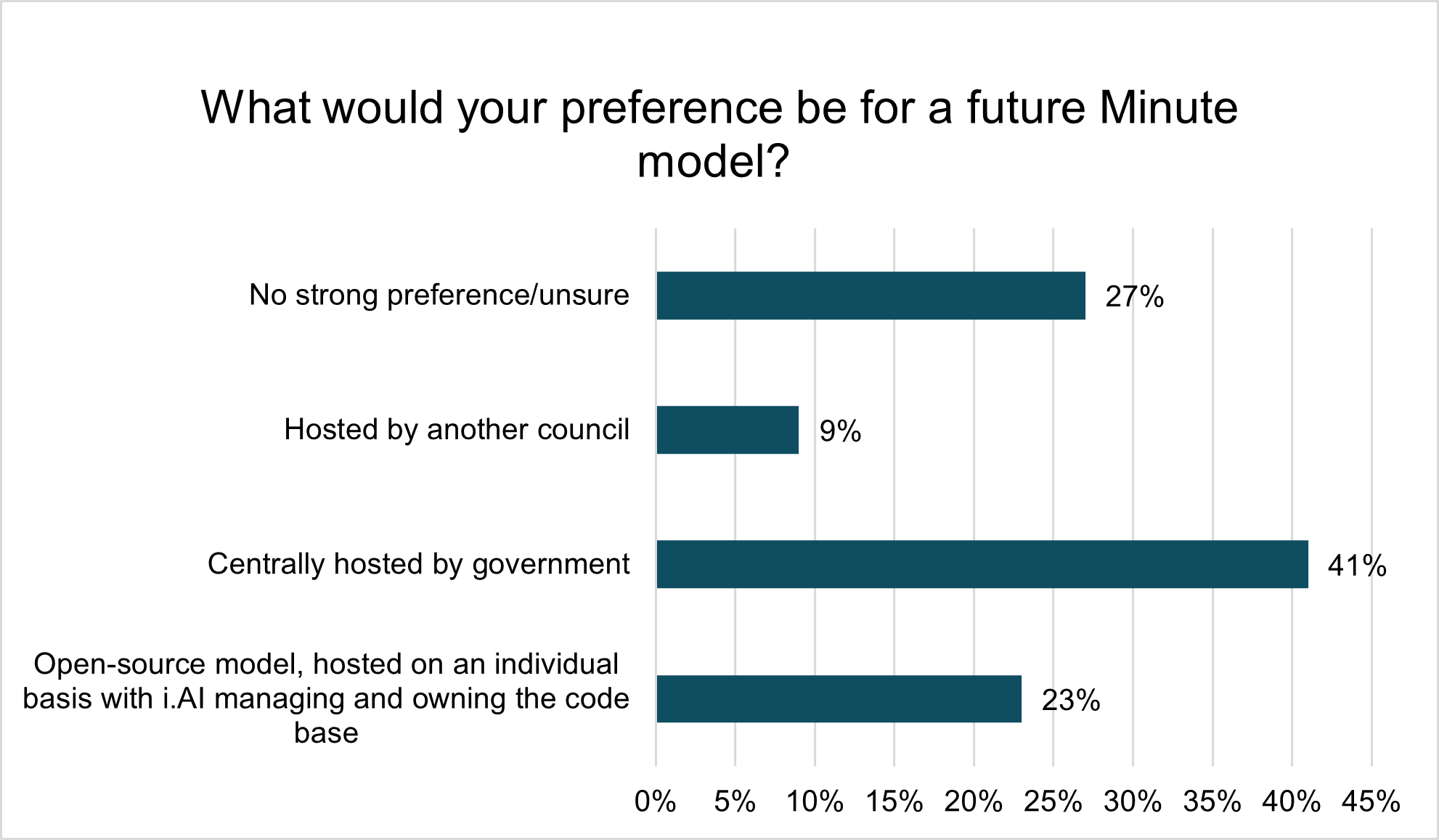
- 41 per cent preferred a centrally managed service, citing benefits such as increased efficiency and reduced costs.
- 27 per cent had no strong preference or were unsure, suggesting difficulty in determining an organisational stance or assessing whether existing infrastructure could support open-source ownership.
- 23 per cent favoured a managed open-source code base, highlighting the flexibility to run the model in their own environment and customise it to meet localised needs.
- 9 per cent preferred the model to be hosted by another council, noting the advantages of sector-led management and a deeper understanding of local service areas where Minute could be applied.
- 0 per cent selected the option for Minute to be hosted by a commercially vetted partner, indicating no current appetite among councils for a commercially managed delivery model.
During discussions, many councils highlighted a lack of internal capacity and technical expertise as a significant barrier to implementing an open-source AI solution. As one council representative explained:
“Minute will need to be provided as a service, as we don't currently have the internal capability required to deploy it using open-source information.”
This feedback reflects a broader challenge across the sector: the significant variation in digital skills, capacity, and resources between local authorities. While some councils have advanced digital infrastructure and dedicated technical teams, others face constraints in staffing, funding, and specialist expertise. These disparities mean that a single, uniform approach to scaling Minute is unlikely to succeed.
Instead, future deployment models will need to account for this diversity, offering flexible options such as centrally hosted services or managed solutions for councils with limited technical capability. Without such support, there is a risk that digital innovation could widen existing inequalities between well-resourced and resource-constrained authorities.
As of 1 October, the Minute codebase was made available as open source on GitHub, enabling councils with in-house development capability to access the repository and deploy the tool locally. This marks an important step toward greater transparency and flexibility, giving technically equipped councils the opportunity to adapt and integrate Minute within their own environments.
This development coincides with a discovery phase led by MHCLG which is exploring how Minute can be scaled sustainably across the sector. The discovery will consider different hosting and deployment models, governance requirements, and funding options to ensure that the tool can be adopted widely while maintaining security, compliance, and ease of use.
Non-participating councils
Despite successfully engaging the majority of councils, 88 per cent of those selected participated in some form, three councils chose not to proceed beyond initial discussions. Follow up engagement with these non-participating councils revealed several key challenges that limited their ability to commit to the pilot.
The most common barrier was limited internal capacity, which made it difficult to allocate resources for onboarding, training, and user acceptance testing. Councils also cited digital learning fatigue, as staff were already trialling multiple AI tools, and successful adoption typically requires intensive support and engagement.
Technical barriers added further complexity. Minute’s reliance on VPN access and the absence of Single Sign-On (SSO) conflicted with some councils’ cloud-first policies. Additionally, as the tool was still in its alpha stage, councils flagged issues such as non-functional live transcription, limited audio playback options, and device-specific recording problems.
Finally, uncertainty around future costs and scalability, combined with the lack of load testing, contributed to decisions to pause participation.
As discussions on scaling Minute across local government continue, it is essential to address these barriers proactively. Doing so will be critical to ensuring successful adoption, reducing risk, and supporting the long-term sustainability of the tool.
Conclusion
The Minute pilot exceeded expectations, with 22 councils actively participating and contributing to a rich programme of learning and innovation. This strong uptake reflects the effectiveness of the community led model, which fostered collaboration, peer learning, and shared problem solving across local authorities. Councils not only engaged with the tool but also contributed valuable resources and insights, such as Dorset Council’s detailed roadmap for piloting and Wokingham’s tailored training materials. These contributions created a culture of openness and mutual support, accelerating readiness and reducing duplication of effort. The openness and willingness of councils to collaborate, drive innovation and support one another were critical to the success of this pilot; without their commitment, these outcomes would not have been possible.
The community led approach developed by the LGA demonstrates a replicable model for central/local government collaboration, combining technical support, community engagement, and practical resources. It also surfaced critical lessons about the conditions needed for successful AI adoption in the public sector. Key themes included the importance of robust assurance processes, the need for flexible deployment models, and the imperative of building digital skills and capacity across the workforce. While assurance and governance were essential for safe and responsible deployment, they often acted as bottlenecks, highlighting the value of shared templates, early engagement with information governance teams, and reframing assurance as an enabler rather than a barrier.
The pilot also underscored the diversity of local government contexts. Councils varied widely in their technical capability, digital maturity, and resource availability, meaning that a one size fits all approach to scaling is unlikely to succeed. Future models will need to offer flexibility such as centrally hosted services for councils with limited capacity while maintaining transparency through open source options for those with in-house expertise. The recent publication of the Minute codebase on GitHub marks an important step in this direction, coinciding with MHCLG’s discovery work on sustainable scaling and governance.
Finally, the pilot highlighted the critical role of workforce capability. Digital confidence and change management emerged as key enablers of adoption, reinforcing the need for structured training and support alongside technical deployment. Without this, the benefits of AI risk being unevenly realised across the sector.
The lessons learned from this pilot are widely applicable, not only to councils but also to central government and beyond. Our developed community led approach provides a blueprint for how to engage effectively with local authorities, support the “Scan, Pilot, Scale” approach to AI adoption, and drive responsible innovation across the public sector. Building on this foundation will be essential to ensure that tools like Minute deliver lasting value, helping local government harness the potential of AI to improve services and outcomes for communities.
Appendix
Sample questionnaire
Section 1: About You
What is your role within your council?
Which council are you representing?
Section 2: Community engagement
How useful did you find the following in supporting your participation in the pilot?
- Online Basecamp Site
- Community Calls
(Scale: Not at all – Slightly – Moderately – Very – Extremely)
To what extent did the community approach help your council with the following:
- Understand how other councils were using Minute?
- Navigate governance, assurance and wider readiness challenges?
- Share or receive best practice?
- Feel part of a wider innovation effort?
(Scale: Not at all – Slightly – Moderately – Very – Extremely)
Section 3: Collaboration and learning
Please indicate whether the following statements are true for your council: (Yes / no / not sure)
- The community provided a safe and open space to raise issues and ask questions
- Your council adapted or improved its approach based on something shared by another council (If yes, please provide an example)
- The community was a valuable opportunity to engage directly with central government colleagues (e.g., i.AI) through the community?
Section 4: Minute deployment
How was Minute used within your council?
Please estimate the per cent of use for recording / summarising each of the following meeting types:
- Frontline meetings with service users [ ] per cent
- Supervision meetings (e.g. line management) [ ] per cent
- Committee meetings [ ] per cent
- General internal meetings [ ] per cent
- Other [ ] per cent
Beyond transcription, how important were the following Minute features? (Scale: Not at all – Slightly – Moderately – Very – Extremely)
- Meeting summarisation (general)
- Specific templates
- Developed by government
To what extent were the following barriers to you deploying Minute in your council?
- Technology (infrastructure, software, cloud)
- Institutional culture (leadership, openness to change)
- Policies and procedures (governance frameworks, risk management, assurance)
- Workforce (skills, knowledge, expertise, capacity)
(Scale: Not at all – Slightly – Moderately – Very – Extremely)
Please provide more details.
How long did it take your council to complete internal assurance and governance processes before deployment?
- Less than 2 weeks
- 2–4 weeks
- 1–2 months
- More than 2 months
Section 5: Evaluating Minute
How likely would you be to recommend Minute to other councils?
(Scale: 0 – Not at all likely; 10 – Extremely likely)
Do you have any comments on your experience of Minute as a tool?
[Open text]
Has your council developed or completed an internal evaluation report on Minute?
- Yes
- No
- In progress
Did you evaluate other transcription tools at the same time as Minute?
- Yes
- No
- Don’t know
[If yes] Which other tools did you evaluate and, briefly, what differences (if any) did you find?
[Open text]
Section 6: Overall reflections
What was the biggest challenge your council faced during the pilot?
What was the most valuable aspect of the community approach during the pilot?
What could be improved in future community-based pilots?
Would you be interested in participating in future AI tool pilots supported by a similar community model?
- Yes
- No
- Maybe
How did participation in the pilot influence your council’s broader approach to AI adoption or experimentation, if at all. Please explain
Do you have any further comments about the Minute pilot?
Section 7: Next steps with Minute
Are you taking forward Minute?
- Yes
- No
- Not sure
If not, why not:
What would your preference be for a future Minute model?
- Open-source model, hosted on an individual basis with i.AI managing and owning the code base
- Centrally hosted by government
- Centrally hosted by a vetted commercial partner
- Hosted by another council
- No strong preference / unsure
Why – please provide more details?
Would you like any further support with making the business case for Minute? If so, please provide more details?
Data Processing Agreement
To ensure that personal data was managed safely, responsibly, and in compliance with data protection law, the LGA, drawing on technical expertise from both LOTI and its own team, facilitated the creation of a central DPA template for councils to use.
Under the Data Protection Act 2018, any organisation that engages a third party to process personal data on its behalf must have a DPA in place. While this is typically embedded within a contractual arrangement, in the context of the pilot, the DPA was issued as a standalone document.
The template was developed with input from councils and reflected a shared understanding of how the Minute tool would be used in practice. It was reviewed by DSIT, acting as the designated Data Processor. Councils were advised to ensure the agreement met their specific requirements and to consult their legal or information governance teams as appropriate. While councils were free to use alternative DPA formats, any modifications needed to reflect the operational realities of the service and be mutually agreed upon with DSIT.
Given that the pilot was conducted at an alpha stage, where the product was still in development and offered free of charge, there was an inherent level of risk. Without a formal contract in place between i.AI and participating councils, it was essential to establish safeguards to ensure data was handled legally, responsibly, and securely. The creation of a DPA, alongside other assurance measures, played a critical role in helping councils consider how to identify and manage these risks effectively.