Best Start Family Hub – Tudor Way is a key part of Worcestershire’s Best Start in Life Family Hubs programme, providing accessible, coordinated support for families with children aged 0–19 (or up to 25 for young people with SEND). Located in the Dines Green area of Worcester, the hub offers a welcoming, non stigmatising space where families can access help early, develop skills and confidence, and connect with services in their local community.
Overview
Best Start Family Hub – Tudor Way is a key part of Worcestershire’s Best Start in Life Family Hubs programme, providing accessible, coordinated support for families with children aged 0–19 (or up to 25 for young people with SEND). Located in the Dines Green area of Worcester, the hub offers a welcoming, non‑stigmatising space where families can access help early, develop skills and confidence, and connect with services in their local community.
The hub is commissioned by Worcestershire County Council and delivered by Action for Children, as part of a countywide model that commissions community and family hub delivery through three local providers: Action for Children, Barnardo’s and Redditch Borough Council. This approach brings together local knowledge, voluntary sector expertise and council leadership to support consistent, place‑based delivery across the county. Tudor Way is one of 10 core Family Hub delivery locations in Worcestershire.
Although Worcestershire was not one of the original 75 councils funded in 2022 to deliver Family Hubs, it had already begun developing a Family Hub model through local public health‑funded 0-19 commissioning models, utilising previous children’s centre buildings around 10 years ago. In recent years Worcestershire has worked to expand and align its local approach with the Family Hubs and Start for Life vision, now delivered locally through the renamed Best Start Family Hubs and Healthy Babies programme.
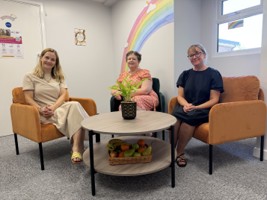
In April 2026, Best Start Family Hub – Tudor Way expanded with the opening of a new dedicated room, creating additional space for group sessions, one‑to‑one support and inclusive activities. The new space reflects growing demand for services and strengthens the hub’s ability to respond flexibly to local need.
Local context
Best Start Family Hub – Tudor Way is located in Dines Green, St John, Worcester, an area that falls within the 10 per cent most deprived neighbourhoods in England. The hub serves a community where families are more likely to experience multiple and overlapping needs, including lower household income, caring responsibilities, and higher levels of health and wellbeing need.
Families using the hub may be navigating a range of systems, such as benefits, health services and education, often alongside significant life transitions including pregnancy, early parenthood or changes in employment. Where needs overlap, engaging with multiple services can be complex and time‑consuming.
The family hub model at Tudor Way is designed to respond to this context by providing a single, accessible local point of contact, through which families can access practical support, advice and professional input. By bringing services together in one place and offering support without requiring referral thresholds to be met, the hub aims to simplify access, reduce duplication and improve continuity of support for families in the local area.
What Tudor Way offers
Tudor Way provides a blend of universal, targeted and appointment‑based support, delivered on site and through strong partnership working.
Families can access:
- maternity and health visiting clinics
- Stay and Play sessions for babies and young children
- speech and language support, including drop‑in “Talking Walk‑In” sessions
- Birth and Beyond antenatal classes
- baby weighing and well‑baby clinics
- counselling and emotional wellbeing support
- smoking cessation support
- practical help such as clothes swaps, food support and signposting
Alongside these offers, the hub plays a crucial coordinating role through its Navigation service, which helps families understand what support is available, access practical help, and make informed choices at key points of need.
A sustained volunteering offer plays an important role at the hub, supporting the delivery of sessions and activities and strengthening connections between the hub and the local community.
Partnership and workforce
Tudor Way works closely with a wide range of partners, including health services, early years settings, schools, SEND services and voluntary sector organisations. Regular communication and joint working support early identification of need and more coordinated responses for families.
The hub has also benefited from increased staffing capacity, including expanded navigation hours, enabling more responsive and proactive support. Staff and volunteers consistently report feeling report feeling confident in their roles, supported through training, supervision and quality assurance.
District-based Best Start Family Hub Networks
Worcestershire Best Start Family Hub Network meetings bring together local partners working with children and families to take a coordinated, place‑based approach to expand local service delivery and improve outcomes. They provide a forum to share intelligence, identify local needs and gaps, and strengthen joint working across services. These meetings also include parent reps to ensure families can be part of service shaping. District Family Hub Network meetings, coordinated and delivered by Worcestershire’s three family hub providers, have been running for around 12 months, engaging a large range of partners and local services.
Navigation and coordination
Navigation is a core component of the Best Start Family Hub – Tudor Way
model, supporting families to understand what help is available locally and how to access it. Navigators provide brief interventions, practical advice and onward signposting, acting as a consistent point of contact for families who may be engaging with multiple services.
This coordinating role helps reduce duplication, improves continuity of support and enables more timely responses to emerging needs. In practice, navigation support often combines practical assistance with information sharing and follow-up, helping families remain engaged and supported over time.
Navigation in practice: a father’s story
The impact of this approach can be seen clearly through the experience of one father supported through Tudor Way’s Navigation service.
The father has three young children and had recently moved the family into permanent accommodation. At the time of referral from the health visitor, he was struggling financially, waiting for child benefit payments and dealing with the wider pressures of providing for his family. He was feeling overwhelmed, uncertain about where to turn, and worried about the impact on his children’s wellbeing.
Before linking with the family hub, the father described feeling significant stress at home. He was concerned about the cost of everyday essentials and about keeping his children occupied during school holidays. He reported that the ongoing financial pressure was beginning to affect family relationships and his own mental health.
Through the Navigation service at Tudor Way, the father was offered practical, timely support. This included a supermarket voucher to help relieve immediate financial pressure, alongside information about local low‑cost and free activities for children, particularly during school holidays. He was signposted to access food provision and family‑friendly activities such as library sessions, cinema screenings and holiday activity programmes.
Crucially, the support was not limited to a single contact. The navigator maintained an ongoing relationship with the father, checking in as circumstances changed and helping him to navigate services as new challenges emerged. The father described this consistency as particularly valuable, noting that having someone available who understood his situation helped him feel supported.
As a result, the father reported feeling more confident and better informed about the support available to his family. He highlighted the value of receiving practical financial assistance alongside the opportunity to speak with someone who had a strong understanding of local services and provision.
This case illustrates how timely, proportionate interventions can help address emerging pressures and reduce the risk of difficulties escalating.
Growing demand and changes to hub design
Monitoring data and practitioner feedback point to strong engagement at Tudor Way. Attendance at sessions has increased, referrals into the hub remain high, and demand for navigation and brief interventions continues to grow. Families frequently report that the hub feels welcoming, accessible and responsive to their needs.
The opening of a new room in April 2026 has been an important development, allowing the hub to:
- increase capacity for group and targeted sessions
- improve flexibility for one‑to‑one support
- enhance inclusion, particularly for children with additional needs
This investment reflects learning from delivery and a commitment to adapting provision as hubs mature and increase their reach.
Impact and outcomes
While impacts are captured in a range of ways, key themes emerging from Tudor Way include:
- improved access to early help and advice
- reduced stress for families facing financial or practical pressures
- the value of a sustained and well‑supported volunteering offer
- better coordination between services
- positive feedback from families, volunteers and partners
Many of these outcomes reflect preventative impact, supporting families before issues escalate to other services.
Learning for other councils
Experience from Best Start Family Hub – Tudor Way highlights several transferable lessons for other councils:
- Strong partnerships with the local nursery and school have been instrumental in successfully engaging families who are traditionally harder to reach.
- District-based network meetings have been key to engage local services to ensure data led, joined up, place-based approaches to supporting families and maximising assets.
- A clear emphasis on the PEEP programme within Stay and Play sessions supports the Home Learning Environment (HLE) and Good Level of Development (GLD). This is reinforced through subtle key messages, effective navigation support, and volunteers modelling best practice.
- Volunteers play a crucial role in the sustainability of Stay and Play sessions, contributing to both delivery and positive outcomes for families.
- A multi-skilled team based at Tudor Way enhances service delivery, enabling more responsive and comprehensive support for families.
Conclusion
Best Start Family Hub – Tudor Way, as part of Worcestershire’s wider network of Family Hub core locations, provides an example of how a commissioned family hub model operates in practice. The combination of open access provision, targeted interventions and navigation supports earlier engagement and coordination across services. The approach offers learning for councils considering integrated models of local family support.