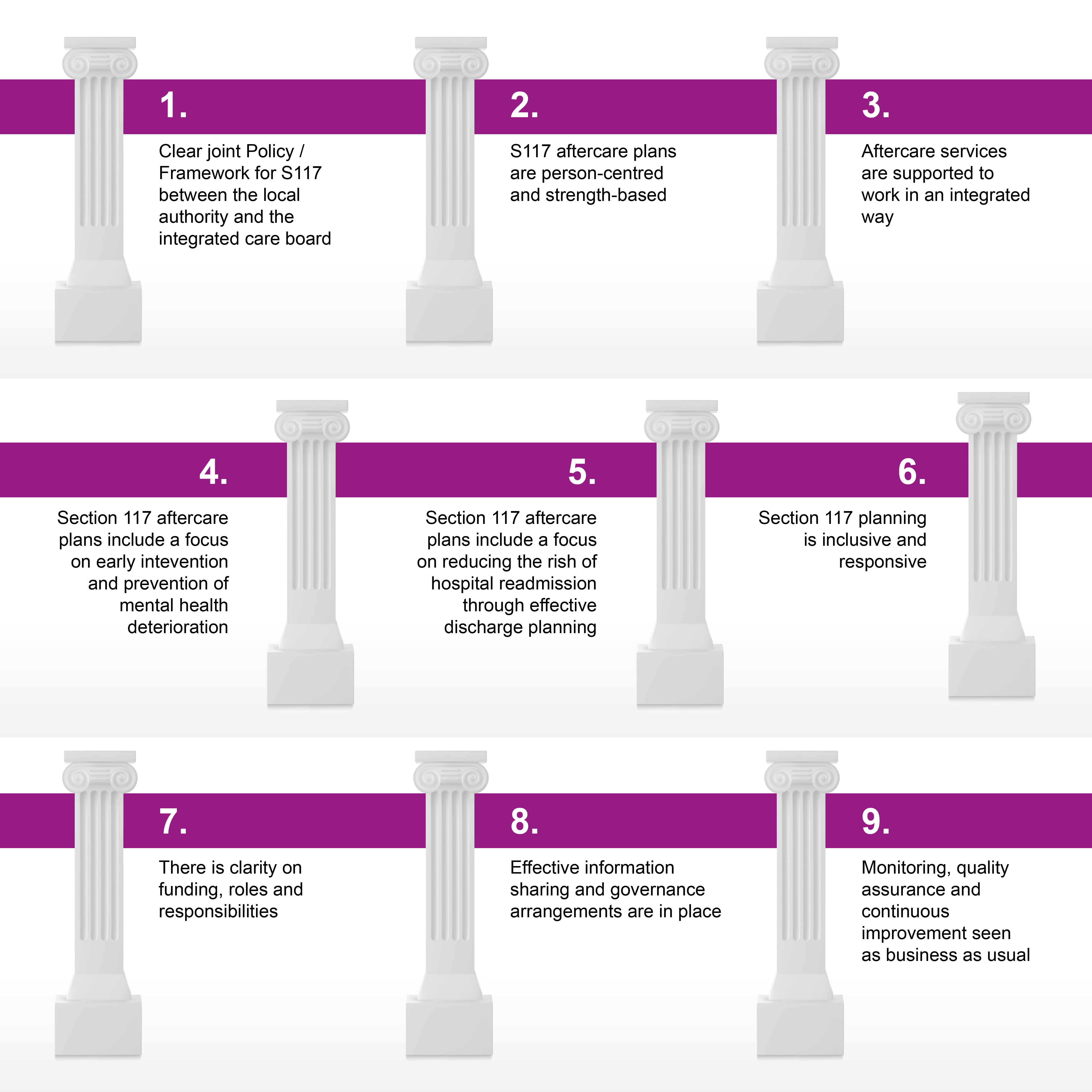
The framework has been designed to support the local authority, working in partnership with Integrated Care Boards, NHS Trusts and wider partners, to effectively plan, commission, deliver and review Section 117 aftercare.
What is Section 117 Aftercare?
Section 117 aftercare is a joint legal duty under the Mental Health Act 1983 placed on local authorities in England and Integrated Care Boards (as the responsible NHS bodies for the purposes of Section 117) to provide or arrange for the provision of aftercare services for people who have been detained under qualifying sections of the Act.
In England, this duty falls on the relevant Integrated Care Board (ICB) and the local authority. NHS England also publishes rules (NHS England – Who Pays?) to help determine which ICB is responsible for commissioning and funding the NHS element of a person’s Section 117 aftercare.
The duty arises automatically when the statutory criteria are met. In broad terms, this is when a person ceases to be detained under a qualifying section of the Act and the Section 117 duty becomes engaged. In line with the Mental Health Act Code of Practice, Section 117 aftercare also includes people on section 17 leave and people subject to a Community Treatment Order.
The purpose of Section 117 aftercare is to provide or arrange services which:
- meet needs arising from or related to the person’s mental disorder; and
- reduce the risk of a deterioration in the person’s mental condition and, accordingly, reduce the risk of the person requiring admission to hospital again for treatment for mental disorder.
A framework for Section 117 Aftercare
The framework has been designed to support the local authority, working in partnership with Integrated Care Boards, NHS Trusts and wider partners, to effectively plan, commission, deliver and review Section 117 aftercare. It is framed around nine interconnecting pillars, which have been developed drawing on the experiences of people who use services and their carers, learning from case law and Ombudsman decisions, and tested through extensive engagement with frontline professionals. Together, these pillars should support lawful, consistent, person-centred and recovery-focused aftercare, ensuring that Section 117 duties are applied fairly, equitably and effectively.