Introduction
The UK is committed to reaching net zero by 2050. This means that the total greenhouse gas emissions would be equal to the emissions removed from the atmosphere, with the aim of limiting climate change.
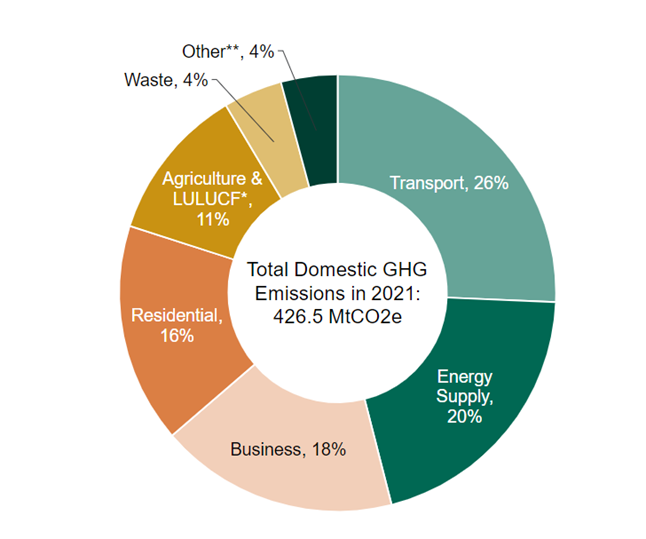
Energy supply is the second largest contributor to UK domestic greenhouse gas emissions. In 2022, energy supply accounted for 20 per cent of the UK’s carbon emissions.
Figure 1 - Greenhouse gas emissions by sector, 2021, by proportion (DESNZ, 2023)
Community energy refers to energy projects that are owned, controlled, or directly benefit local communities. These initiatives typically involve the generation of renewable energy – such as solar, wind, hydro, or biomass – at a local scale.
However community energy projects do not always focus on energy generation. They may also focus on energy efficiency and carbon reduction, and can include joint energy purchase schemes, car share clubs, electric vehicle charging point schemes, and household energy reduction initiatives.
What sets community energy schemes apart from others are their focus on community involvement, ownership, and the reinvestment of profits back into the local area.
This briefing explains the business case for local authorities to support the creation of local community energy schemes and sets out suggested interventions that local
authorities can take across different areas. It is one of a series of LGA briefings relating to environmental sustainability.
The business case for action
As well as playing a key role in meeting the UK’s net zero target, supporting the local development of community energy projects has positive impacts on equality, social cohesion and economic opportunity:
Economic benefits
- Community energy projects can generate revenue and create jobs within the local area. In 2021 community energy businesses raised £21.5 million of investment for new projects and spent £15 million of community energy income to boost local economies.
- Energy efficiency projects can save residents expenditure on energy. The sector’s energy efficiency interventions are estimated to have reached 57,600 people/organisations and saved over £3.3m for UK households in 2021.
- Profits from locally generated energy can be used to set up a community benefit fund.
- By directly investing in renewable energy infrastructure, local authorities can attract funding, stimulate economic activity, and provide employment opportunities for local residents.
Carbon reduction
- Transitioning to renewable energy sources is essential for combating climate change and reducing carbon emissions. Community energy projects contribute to this transition by displacing fossil fuels with clean, renewable energy sources, or reducing energy consumption.
- Community energy businesses can help local authorities progress their strategic objectives (e.g. net zero, climate emergency, local economic development, social engagement, fuel poverty reduction). They can also help local authorities to engage local communities with Local Area Energy Plans.
Equality and social cohesion
- Community energy projects have the potential to bring people together, fostering a sense of community pride, collaboration, and shared purpose.
- Retrofit projects can regenerate and renew homes, making them fit for the future and bringing health benefits to residents through increased insulation and reduced fuel poverty.
- Some community energy projects have broader social roles and provide not just energy advice to households, but also advice on claiming benefits and managing energy debt.
- By involving residents in decision-making processes and offering opportunities for participation, these initiatives can strengthen social ties and enhance community well-being.
Local ownership and control
- One of the key advantages of community energy projects is that they empower local communities. Communities have the opportunity to take ownership of their energy production, ensuring that decisions are made in the best interests of local residents.
Suggested interventions with case study links
There are many things, practical, strategic and communication focused that councils can do to support the development of local community energy schemes.
Giving access to assets and services
- Making sites (e.g. roofs and land) available for community owned renewable installations (such as solar PV and wind turbines).
- Allowing community energy groups use of local procurement frameworks
- Bristol City Council was able to help facilitate a local solar community project by leasing City Council land to a community group to host the solar farm. The City Council also provided a bridging loan to the project which has subsequently been successfully paid back. The local community benefit through a share of the profits from the energy generated and annual output is around 4300MWh, enough to power 1,000 homes.
Funding support
- Local authorities can provide catalyst funding to support the development of grassroots projects. Councils have the opportunity to become social investors that can achieve significant value for local taxpayers, and impact for their communities.
- Devon County Council launched a £200,000 Community Energy Fund in September 2021 to support the recovery of businesses and the wider economy of Devon following the COVID-19 pandemic. The key objective of this fund was to support and develop a small number of high-quality community energy initiatives that will help to advance and strengthen the community energy sector in Devon.
Power purchase agreements
- Local authorities have the ability to use their energy spend to support local community energy generation by offering Power Purchase Agreements (PPAs). Local authorities can negotiate long-term PPAs with community developers that create financially viable projects, while offering the council a source of renewable energy and additional social, economic and environmental benefits to the area.
- Newport City Council has been working in collaboration with Egni Co-op, a community organisation that funds and manages a solar photo voltaic installation in Wales, to meet the target of becoming a carbon neutral organisation by 2030. The Council agreed to enter into a power purchase agreement (PPA) with Egni for the energy generated by solar panels owned by Engi, but mounted on council buildings.
Providing support to emerging projects
- In addition to financial support, councils can make available officer resource or in-kind support to community energy groups. Local authorities can support emerging community energy groups by various means including providing grants (feasibility), training, supporting meetings, guidance on planning requirements and facilitating networking.
- Plymouth City Council helped to find founder members for Plymouth Energy Community and provided a start-up loan, a grant and staff expertise via a service agreement, seeding the start of what is now an independent, volunteer-run organisation.
- Swaffham Prior Community Land Trust approached Cambridgeshire County Council in 2017 to collaborate on a community heat scheme which will enable the village to stop relying on oil and move to a renewable heat source for heating and hot water needs. The Council was able to provide funding and planning permission.
Partnership projects
- Joint initiatives between councils and community energy groups can catalyse delivery of local energy projects, drawing on the skills and reach of councils and community organisations.
- Devon County Council has partnered with community energy groups in the delivery of retrofit advice. These groups are seen as critical to developing support, knowledge and trust in retrofit work and in accessing those in fuel poverty. The community energy groups have in places developed to operate as suppliers themselves by building knowledge and training up retrofit assessors with Community Retrofit Accredited Training.
- Energise Barnsley is a partnership between Barnsley Council and Energise Barnsley, a social enterprise set up by and with the council. Collaborating with Energise Barnsley has ensured that the council was able to fulfil its Energy Strategy objectives, gain support from parts of the community it had struggled to reach before, and deliver tangible benefits to vulnerable residents.
- The Royal Borough of Kensington and Chelsea Council has partnered with Repowering to create the North Kensington Community Energy Project. It has installed 86 kWp of solar panels across 3 community locations, with more solar panels planned to be installed in the future. As well as making the borough greener, this Repowering project is selling back the solar-generated power to the community buildings at a discounted price and reducing energy costs. A large part of the income generated will also fund community projects, such as paid internships that educate and provide job training for 16-19 year olds in the local area.